Skip to content

Haircuts for thinning hair and a widening part

“Thin hair” is two different things: density (how many hairs you have) and strand diameter (how fine each hair is). Both limit what a cut can hold. The engine favours blunt perimeters, shorter lengths and texture on top, and marks down heavy layering and styles that depend on volume. Hair physics

For a widening part (the Ludwig scale, stages I–III), it favours a side or zigzag part, blunt bobs and lobs, and stacked shapes for crown thinning, and flags heavy one-length hair and a centre part sitting on the widening line. Barber consensus

A haircut can make thinning less visible; it can't treat it. If you're noticing new or faster thinning, see a dermatologist.

A widening part: what the engine favours and flags

For a widening part (Ludwig I–III), each cut below carries a fixed nudge in the catalog. Cuts with a Ludwig limit also get the same “one stage past: caveat, two past: hidden” gate as men’s cuts do for Norwood stages.

Favoured with a widening part

  • Keeps a widening part less visible, thanks to a side part or a blunt, shorter shape.

  • Keeps a widening part less visible, thanks to a side part or a blunt, shorter shape.

  • Keeps a widening part less visible, thanks to a side part or a blunt, shorter shape.

  • Keeps a widening part less visible, thanks to a side part or a blunt, shorter shape.

  • Keeps a widening part less visible, thanks to a side part or a blunt, shorter shape.

  • Keeps a widening part less visible, thanks to a side part or a blunt, shorter shape.

  • Keeps a widening part less visible, thanks to a side part or a blunt, shorter shape.

Marked down with a widening part

  • Butterfly cutWorks up to Ludwig 2

    Heavy length or a centre part can draw the eye to a widening part.

  • Curtain-bang layered cutWorks up to Ludwig 2

    Heavy length or a centre part can draw the eye to a widening part.

  • Curtains / middle partWorks up to Ludwig 2

    Heavy length or a centre part can draw the eye to a widening part.

  • Long layers (V or U)Works up to Ludwig 2

    Heavy length or a centre part can draw the eye to a widening part.

  • Long one-lengthWorks up to Ludwig 1

    Heavy length or a centre part can draw the eye to a widening part.

Ranked by the engine · example profile 1

Women: fine 1B hair, low density, widening part (Ludwig II), average proportions

A full engine run for this example profile, open to any length and style, so only the hair and the concern drive the order. Scores are the engine’s 0–100 fit for this profile, not a rating of anyone’s looks; confidence: high.

1. Blunt chin bob

90/100 fit

Best on 1A–2A · top 8–10 in (20.5–25.5 cm) · recut every 6–8 weeks

Why it ranks here

  • Keeps a widening part less visible, thanks to a side part or a blunt, shorter shape.Barber consensus
  • Suits 1B straight hair: the shape holds without fighting how your hair falls.Hair physics
  • A blunt perimeter keeps fine hair looking thick at the ends.Hair physics

Needs a recut every 6–8 weeks to stay sharp (about $210/yr at $30 a cut).

When it doesn’t work

  • A square jaw or a large chin (end above or below the chin), 2C+ hair (turns into a triangle), dense coarse hair.
  • 2C–4C hair (wavy, curly and coily): the shape depends on a texture it can't hold, so we rule it out.
  • A hairline past Norwood 3: at stage 4 it's shown with a caveat; beyond that we hide it.

Tell your barber

“One length at jaw or chin; minimal layering; slightly weighted perimeter.”

Upkeep: trim every 6–8 weeks, about $210–$270 a year at $30 a cut.
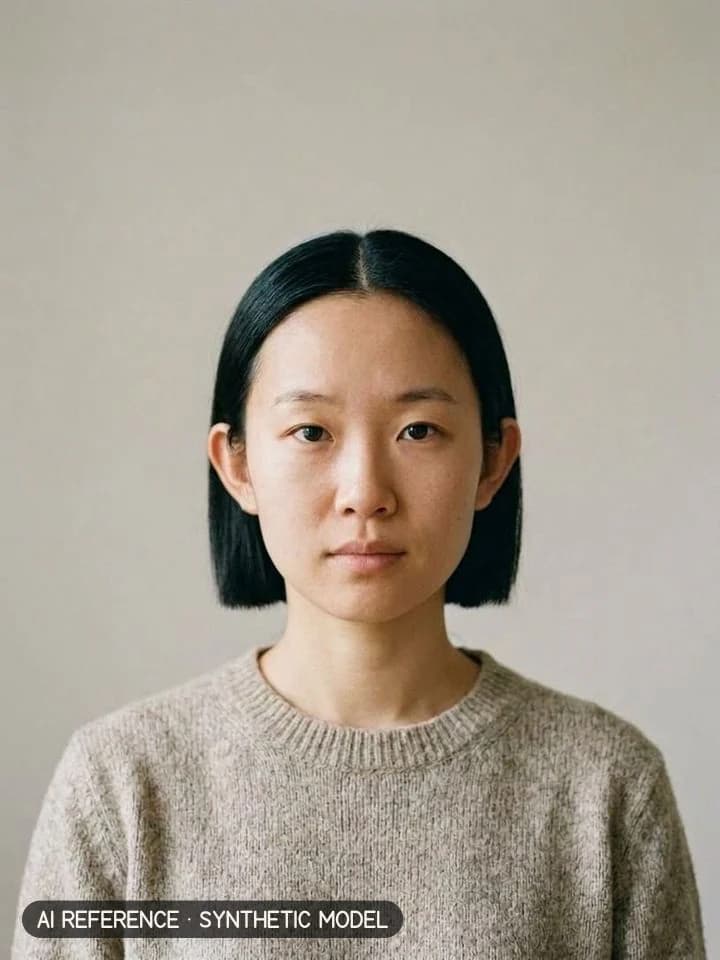
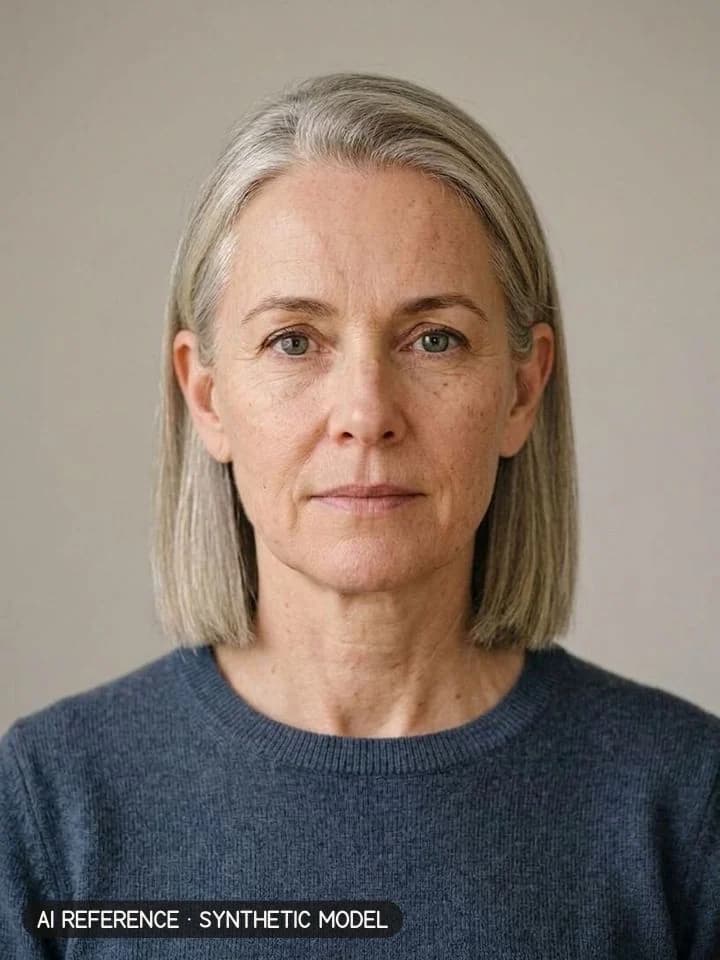
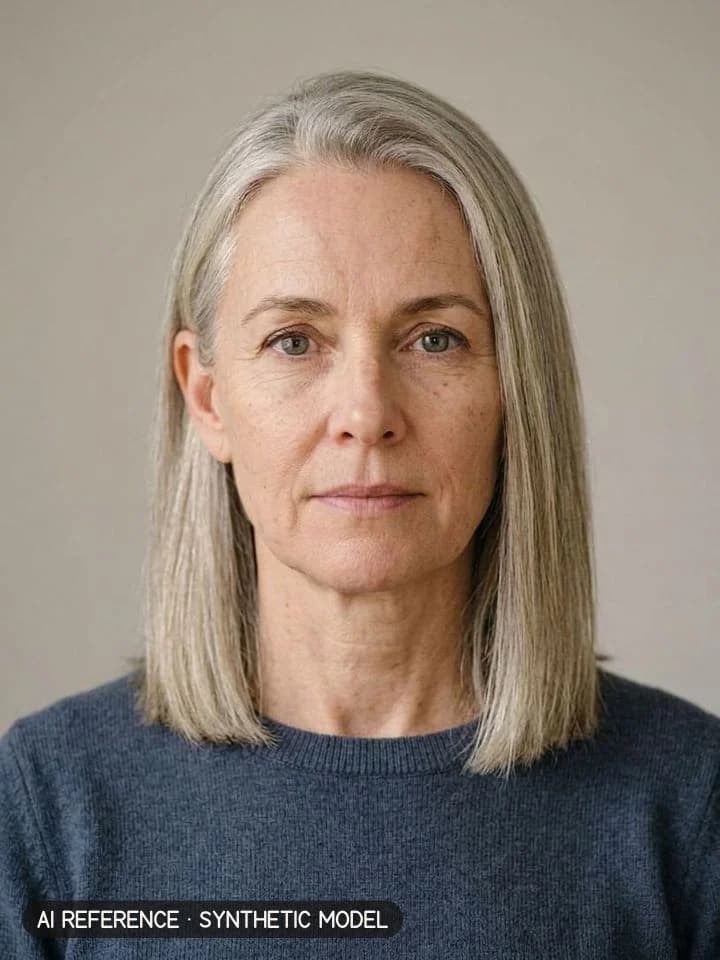
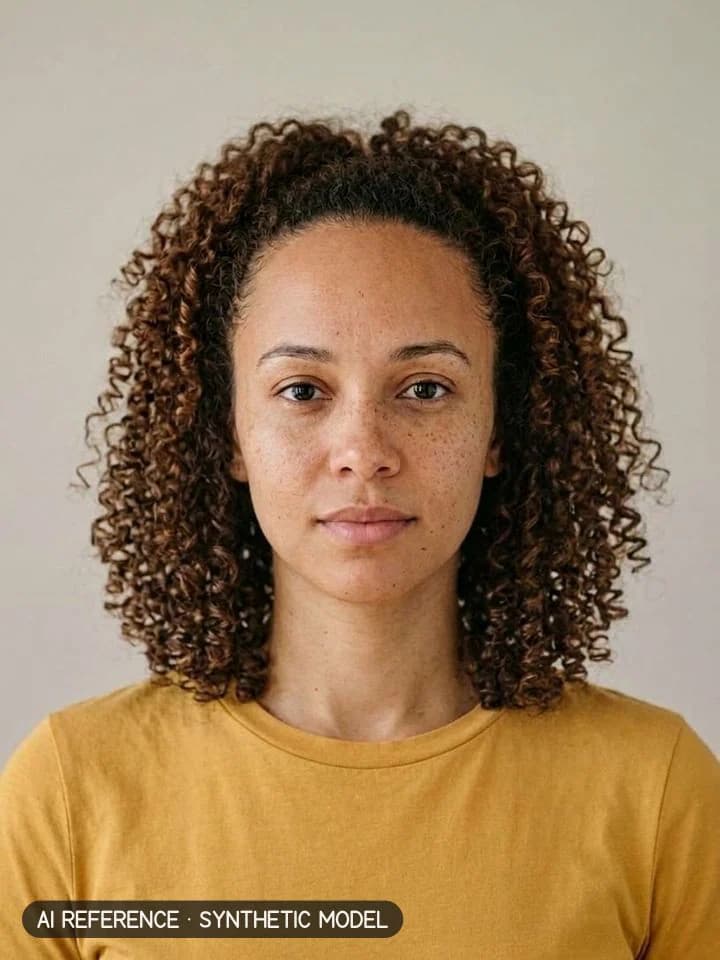
Blunt chin bob on Model W1 (light skin · straight 1B hair · 20s). AI reference on a synthetic model — not a real person.Blunt chin bob on Model W2 (fair skin · straight 1C hair with silver strands · 50s). AI reference on a synthetic model — not a real person.Blunt chin bob on Model W3 (olive skin · wavy 2A–2B hair · 30s). AI reference on a synthetic model — not a real person.

AI references on synthetic models, not real people
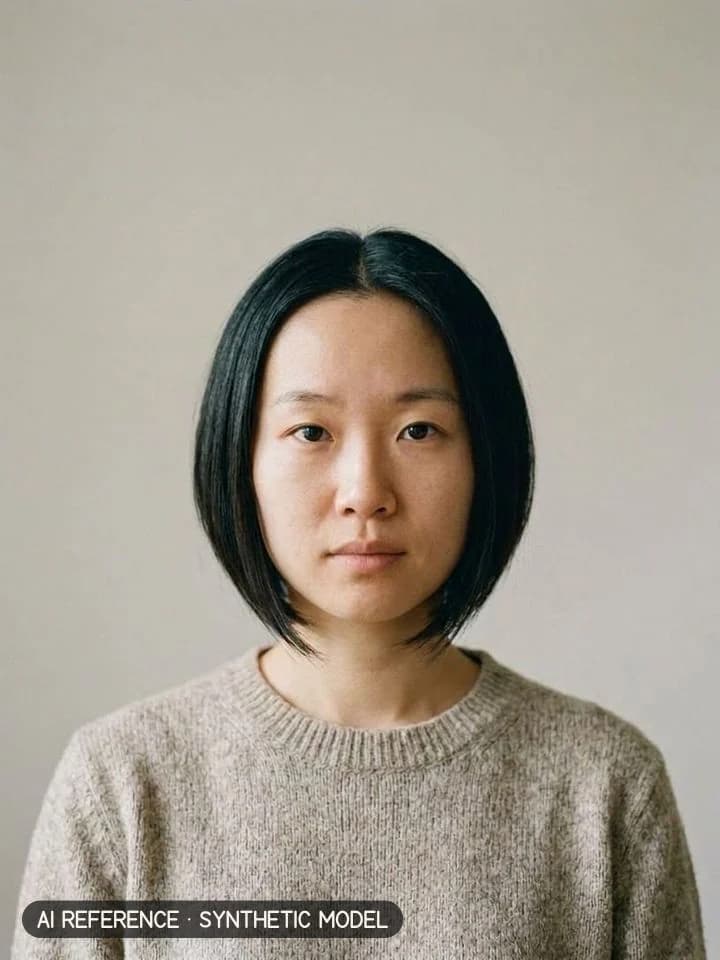
Best on 1A–2B · top 6–10 in (15–25.5 cm) · recut every 5–7 weeks

Why it ranks here

  • Keeps a widening part less visible, thanks to a side part or a blunt, shorter shape.Barber consensus
  • Suits 1B straight hair: the shape holds without fighting how your hair falls.Hair physics
  • A stacked nape builds volume where lower-density hair needs it.Hair physics

Needs a recut every 5–7 weeks to stay sharp (about $210/yr at $30 a cut).

When it doesn’t work

  • Long faces (keep the front at chin length); coarse curly hair puffs out.
  • 2C–4C hair (wavy, curly and coily): the shape depends on a texture it can't hold, so we rule it out.
  • A hairline past Norwood 3: at stage 4 it's shown with a caveat; beyond that we hide it.

Tell your barber

“Graduated stacked nape; front longer at chin to collarbone; angle to taste.”

Upkeep: trim every 5–7 weeks, about $210–$300 a year at $30 a cut.

Stacked / inverted bob on Model W1 (light skin · straight 1B hair · 20s). AI reference on a synthetic model — not a real person.Stacked / inverted bob on Model W2 (fair skin · straight 1C hair with silver strands · 50s). AI reference on a synthetic model — not a real person.Stacked / inverted bob on Model W3 (olive skin · wavy 2A–2B hair · 30s). AI reference on a synthetic model — not a real person.

AI references on synthetic models, not real people

3. Classic pixie

89/100 fit

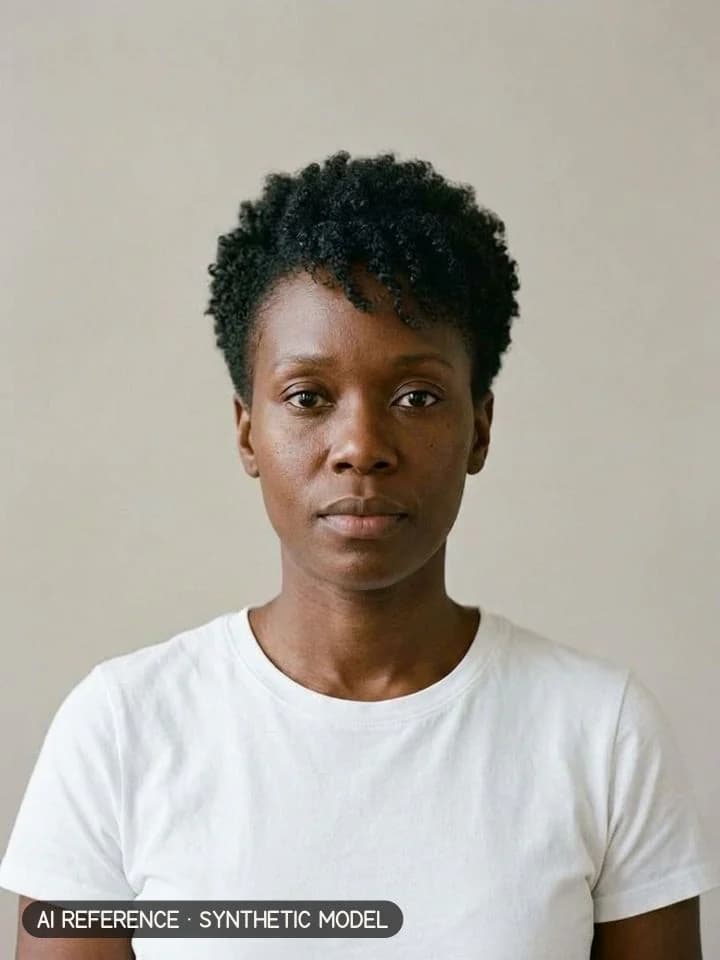
Best on 1A–2B, 4A–4C · top 1–3 in (2.5–7.5 cm) · recut every 4–6 weeks

Why it ranks here

  • Keeps a widening part less visible, thanks to a side part or a blunt, shorter shape.Barber consensus
  • Suits 1B straight hair: the shape holds without fighting how your hair falls.Hair physics
  • A short, stacked shape gives fine hair lift at the crown.Hair physics

Needs a recut every 4–6 weeks to stay sharp (about $270/yr at $30 a cut).

When it doesn’t work

  • A short neck, a jaw-heavy lower third, prominent ears, a crown cowlick, thick coarse hair (needs debulking); grows out awkwardly.
  • 2C–3C hair (wavy and curly): the shape depends on a texture it can't hold, so we rule it out.
  • A hairline past Norwood 3: at stage 4 it's shown with a caveat; beyond that we hide it.

Tell your barber

“Top 1–3 in; tapered sides and nape; soft side fringe; debulk if thick.”

Upkeep: trim every 4–6 weeks, about $270–$390 a year at $30 a cut.

Classic pixie on Model W1 (light skin · straight 1B hair · 20s). AI reference on a synthetic model — not a real person.Classic pixie on Model W5 (deep brown skin · coily 4A–4B hair · 30s). AI reference on a synthetic model — not a real person.Classic pixie on Model W6 (medium-dark brown skin · tightly curly 3C–4A hair · 40s). AI reference on a synthetic model — not a real person.

AI references on synthetic models, not real people

4. Buzz / crop

89/100 fit

Best on 1A–4C · top 0.3–0.5 in (0.5–1.5 cm) · recut every 2–4 weeks

Why it ranks here

  • Keeps a widening part less visible, thanks to a side part or a blunt, shorter shape.Barber consensus
  • Suits 1B straight hair: the shape holds without fighting how your hair falls.Hair physics
  • Very short hair shows less contrast between thinner and fuller areas.Hair physics

Needs a recut every 2–4 weeks to stay sharp (about $390/yr at $30 a cut).

When it doesn’t work

  • An irregular head shape, prominent ears, or wanting a soft look.
  • Scores lower if you have prominent ears.

Tell your barber

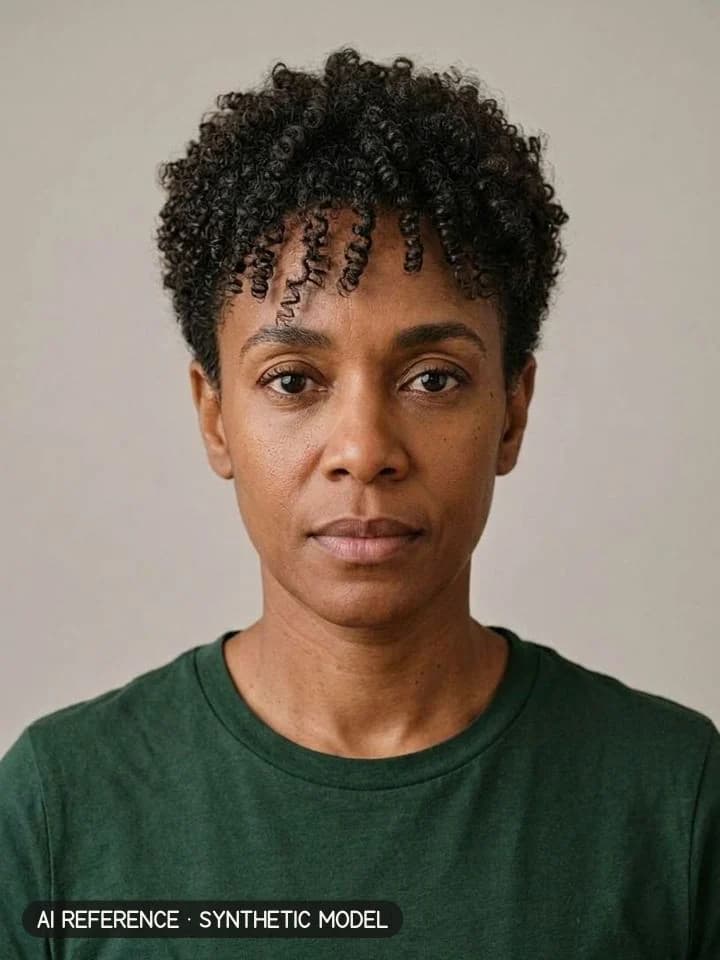
“#2–4 all over or a textured crop; soft tapered neckline.”

  1. #26 mm
  2. #310 mm
  3. #413 mm

Upkeep: trim every 2–4 weeks, about $390–$780 a year at $30 a cut.

Buzz / crop on Model W2 (fair skin · straight 1C hair with silver strands · 50s). AI reference on a synthetic model — not a real person.Buzz / crop on Model W5 (deep brown skin · coily 4A–4B hair · 30s). AI reference on a synthetic model — not a real person.Buzz / crop on Model W6 (medium-dark brown skin · tightly curly 3C–4A hair · 40s). AI reference on a synthetic model — not a real person.

AI references on synthetic models, not real people
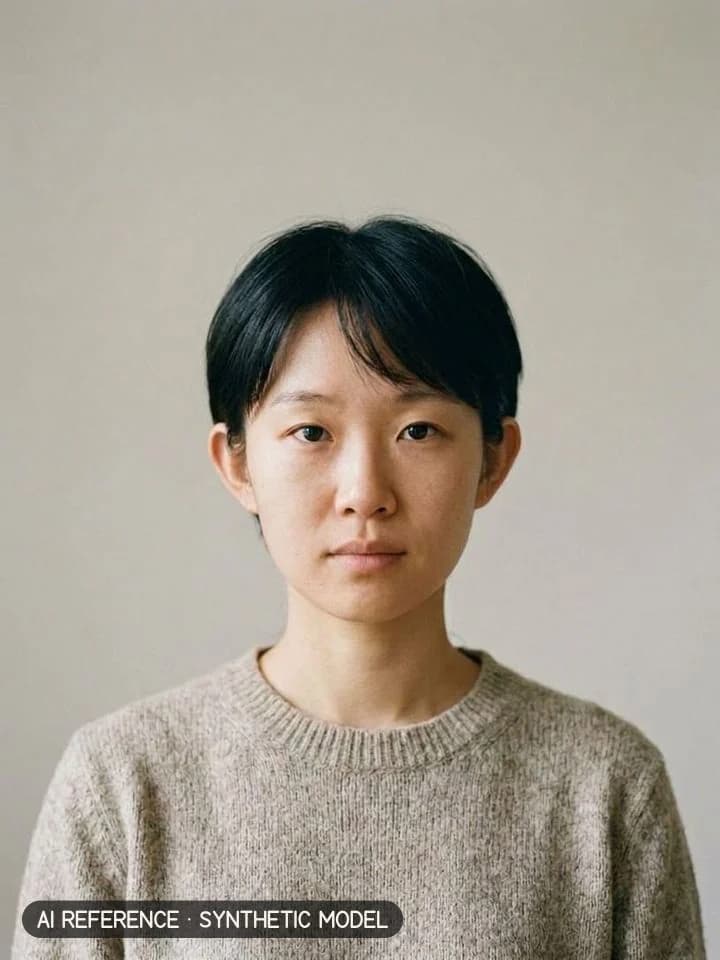
5. Long pixie / bixie

88/100 fit

Best on 1A–2C · top 2–4 in (5–10 cm) · recut every 5–7 weeks

Why it ranks here

  • Keeps a widening part less visible, thanks to a side part or a blunt, shorter shape.Barber consensus
  • Suits 1B straight hair: the shape holds without fighting how your hair falls.Hair physics

Needs a recut every 5–7 weeks to stay sharp (about $210/yr at $30 a cut).

When it doesn’t work

  • Very thick, coarse hair needs debulking.
  • 3B–4C hair (curly and coily): the shape depends on a texture it can't hold, so we rule it out.
  • A hairline past Norwood 3: at stage 4 it's shown with a caveat; beyond that we hide it.

Tell your barber

“2–4 in top and sides, ears half covered; tapered nape; long side-swept fringe.”

Upkeep: trim every 5–7 weeks, about $210–$300 a year at $30 a cut.

Long pixie / bixie on Model W2 (fair skin · straight 1C hair with silver strands · 50s). AI reference on a synthetic model — not a real person.Long pixie / bixie on Model W3 (olive skin · wavy 2A–2B hair · 30s). AI reference on a synthetic model — not a real person.Long pixie / bixie on Model W4 (light brown skin · curly 3A–3B hair · 20s). AI reference on a synthetic model — not a real person.

AI references on synthetic models, not real people
6. Lob (long bob)

86/100 fit

Best on 1A–3A · top 10–12 in (25.5–30.5 cm) · recut every 8–10 weeks

Why it ranks here

  • Keeps a widening part less visible, thanks to a side part or a blunt, shorter shape.Barber consensus
  • Suits 1B straight hair: the shape holds without fighting how your hair falls.Hair physics

Needs a recut every 8–10 weeks to keep its shape (about $150/yr at $30 a cut).

When it doesn’t work

  • Few — a dependable middle ground.
  • 3B–4C hair (curly and coily): the shape depends on a texture it can't hold, so we rule it out.
  • A hairline past Norwood 2: at stage 3 it's shown with a caveat; beyond that we hide it.

Tell your barber

“Collarbone length; blunt or light long layers; bevel the ends under or out.”

Upkeep: trim every 8–10 weeks, about $150–$210 a year at $30 a cut.

Lob (long bob) on Model W2 (fair skin · straight 1C hair with silver strands · 50s). AI reference on a synthetic model — not a real person.Lob (long bob) on Model W3 (olive skin · wavy 2A–2B hair · 30s). AI reference on a synthetic model — not a real person.Lob (long bob) on Model W4 (light brown skin · curly 3A–3B hair · 20s). AI reference on a synthetic model — not a real person.

AI references on synthetic models, not real people
Popular cuts this profile should skip

  • Wolf cut: gets its shape from a tighter curl pattern (2A–3B); 1B hair doesn't have the curl to hold it. Closer fit: Curtain-bang layered cut.
  • Butterfly cut: ranks low for this profile: the shape relies on thicker hair; with lower density it can look thin in places.
  • Shag: ranks low for this profile: 1B hair can do this, but it sits outside the cut's easiest range (2A–3B) — expect a little more styling.

Ranked by the engine · example profile 2

Men: fine 2A hair, low density, Norwood 2, average proportions

A full engine run for this example profile, open to any length and style, so only the hair and the concern drive the order. Scores are the engine’s 0–100 fit for this profile, not a rating of anyone’s looks; confidence: high.

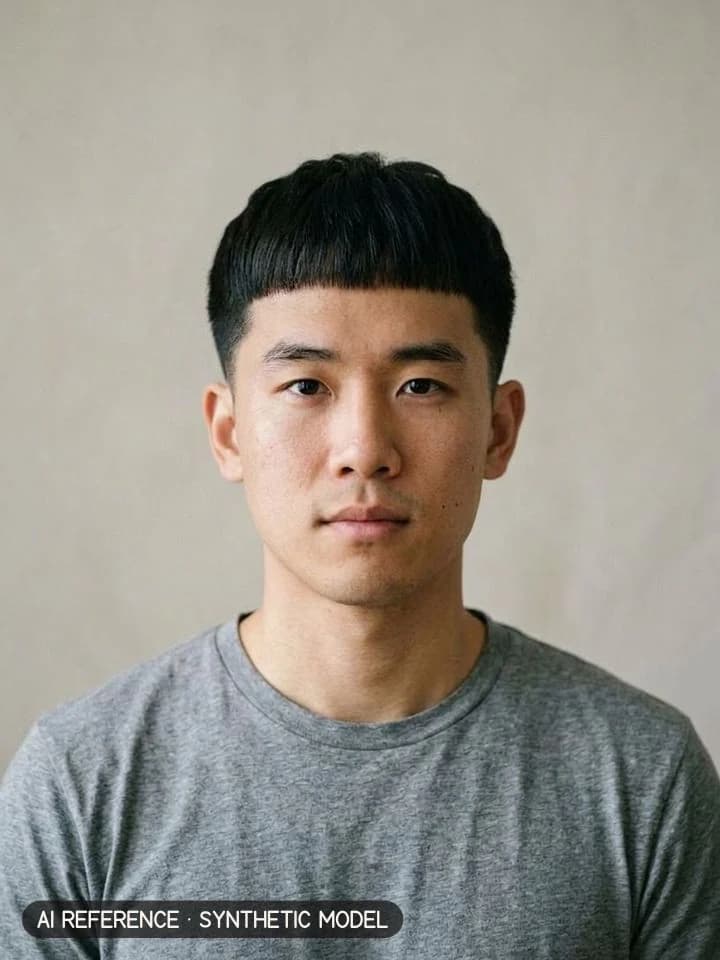
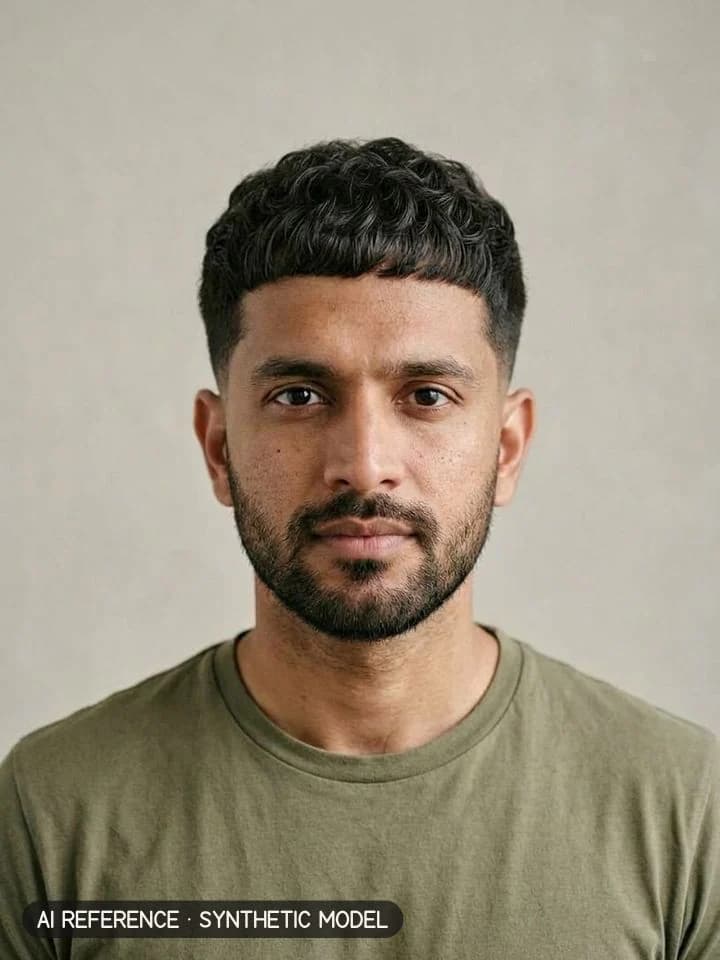
1. Textured crop

91/100 fit

Best on 1A–3B · top 1–2 in (2.5–5 cm) · recut every 3–4 weeks

Why it ranks here

  • Brings hair forward over the temples, which softens stage-2 recession.Barber consensus
  • Works with 2A waves instead of against them.Hair physics
  • Point-cut texture on top makes fine hair look fuller.Hair physics

Needs a recut every 3–4 weeks to stay sharp (about $390/yr at $30 a cut).

When it doesn’t work

  • A low forehead; a very round face if the top is left flat.
  • 4A–4C hair (coily): the shape depends on a texture it can't hold, so we rule it out.
  • A hairline past Norwood 3: at stage 4 it's shown with a caveat; beyond that we hide it.

Tell your barber

“Mid or high skin fade; top 1–2 in point-cut for texture; choppy fringe ~1 in above brows.”

  1. Skin0 mm
  2. #13 mm
  3. #26 mm

Upkeep: trim every 3–4 weeks, about $390–$510 a year at $30 a cut.

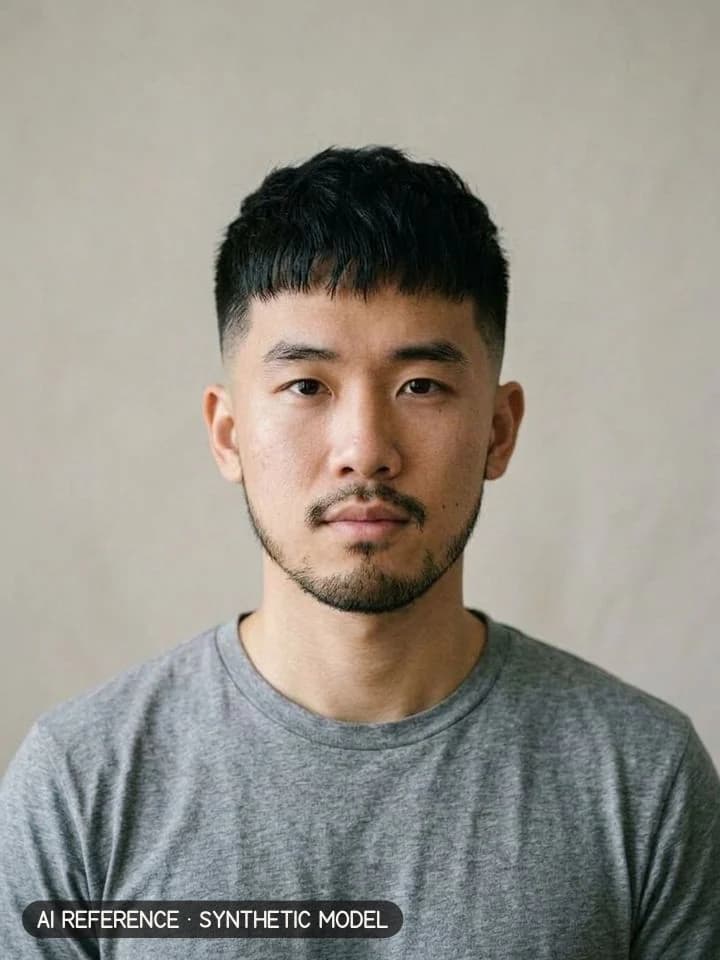
Textured crop on Model M1 (light skin · straight 1B hair · 20s). AI reference on a synthetic model — not a real person.Textured crop on Model M2 (fair skin · fine-wavy 2A hair with some gray · 40s). AI reference on a synthetic model — not a real person.Textured crop on Model M5 (light brown skin · curly 3B–3C hair · 20s). AI reference on a synthetic model — not a real person.

AI references on synthetic models, not real people
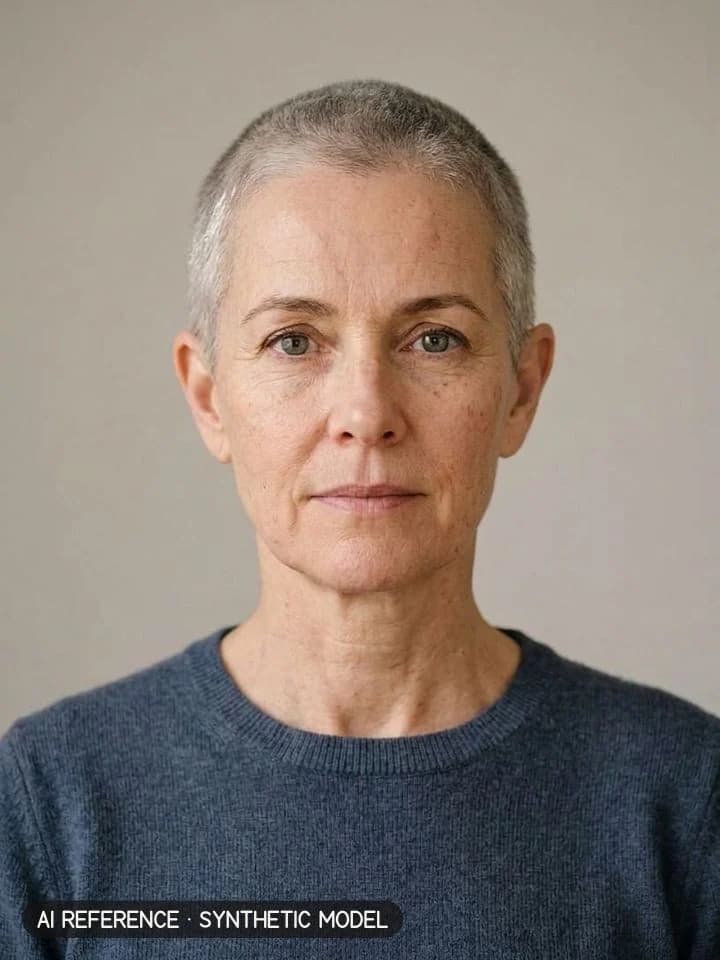
2. Crew cut

90/100 fit

Best on 1A–3B · top 1–1.5 in (2.5–4 cm) · recut every 3–4 weeks

Why it ranks here

  • Keeps the top short enough to suit a stage-2 hairline.Barber consensus
  • Works with 2A waves instead of against them.Hair physics
  • A short, even length makes fine hair look denser.Hair physics

Needs a recut every 3–4 weeks to stay sharp (about $390/yr at $30 a cut).

When it doesn’t work

  • A very long face (the extra height lengthens it further).
  • 3C hair (curly): the shape depends on a texture it can't hold, so we rule it out.
  • A hairline past Norwood 3: at stage 4 it's shown with a caveat; beyond that we hide it.

Tell your barber

“#2–3 sides tapered; top 1–1.5 in at front graduating shorter to crown.”

  1. #26 mm
  2. #310 mm

Upkeep: trim every 3–4 weeks, about $390–$510 a year at $30 a cut.

Crew cut on Model M2 (fair skin · fine-wavy 2A hair with some gray · 40s). AI reference on a synthetic model — not a real person.Crew cut on Model M4 (deep brown skin · coily 4C hair · 30s). AI reference on a synthetic model — not a real person.Crew cut on Model M5 (light brown skin · curly 3B–3C hair · 20s). AI reference on a synthetic model — not a real person.

AI references on synthetic models, not real people
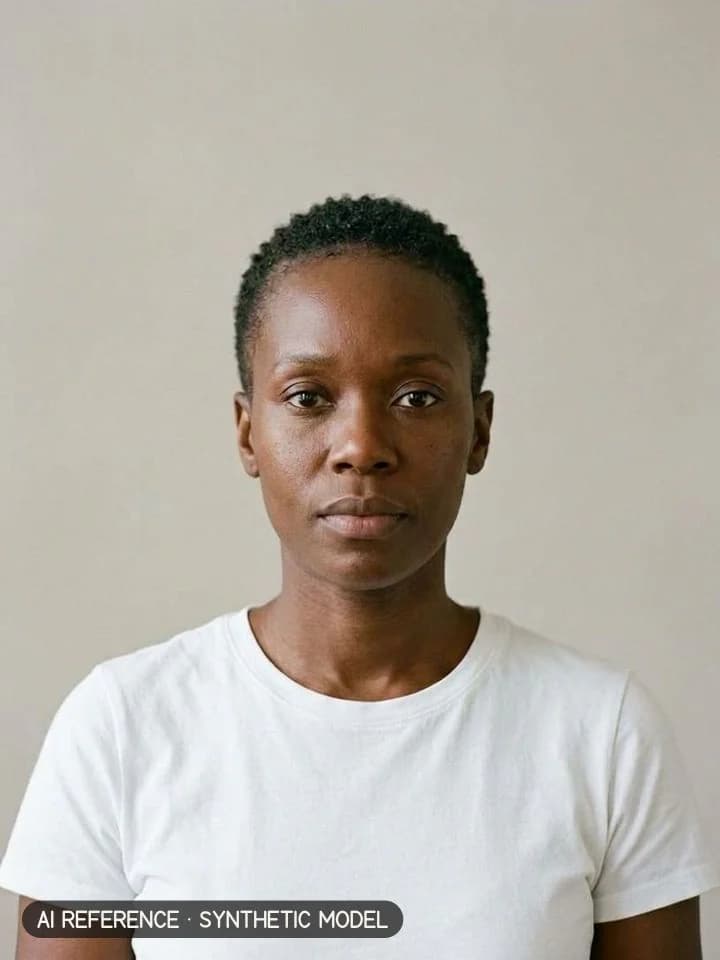
3. French crop

89/100 fit

Best on 1A–2C · top 1–2 in (2.5–5 cm) · recut every 3–4 weeks

Why it ranks here

  • Brings hair forward over the temples, which softens stage-2 recession.Barber consensus
  • Works with 2A waves instead of against them.Hair physics
  • Forward texture covers temple recession.Barber consensus

Needs a recut every 3–4 weeks to stay sharp (about $390/yr at $30 a cut).

When it doesn’t work

  • A low forehead, a front cowlick, a round face without fade contrast.
  • 3B–4C hair (curly and coily): the shape depends on a texture it can't hold, so we rule it out.
  • A hairline past Norwood 3: at stage 4 it's shown with a caveat; beyond that we hide it.

Tell your barber

“Blunt straight fringe at mid-forehead; top 1–2 in; low or mid taper sides.”

Upkeep: trim every 3–4 weeks, about $390–$510 a year at $30 a cut.

French crop on Model M1 (light skin · straight 1B hair · 20s). AI reference on a synthetic model — not a real person.French crop on Model M2 (fair skin · fine-wavy 2A hair with some gray · 40s). AI reference on a synthetic model — not a real person.French crop on Model M3 (medium brown skin · thick wavy 2B–2C hair · 30s). AI reference on a synthetic model — not a real person.

AI references on synthetic models, not real people
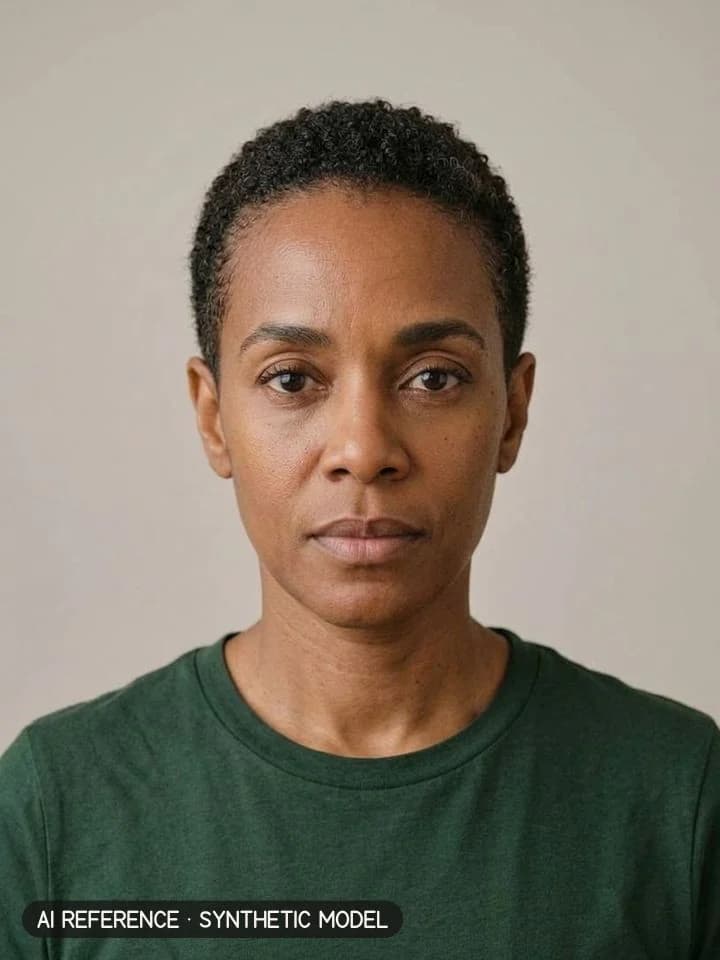
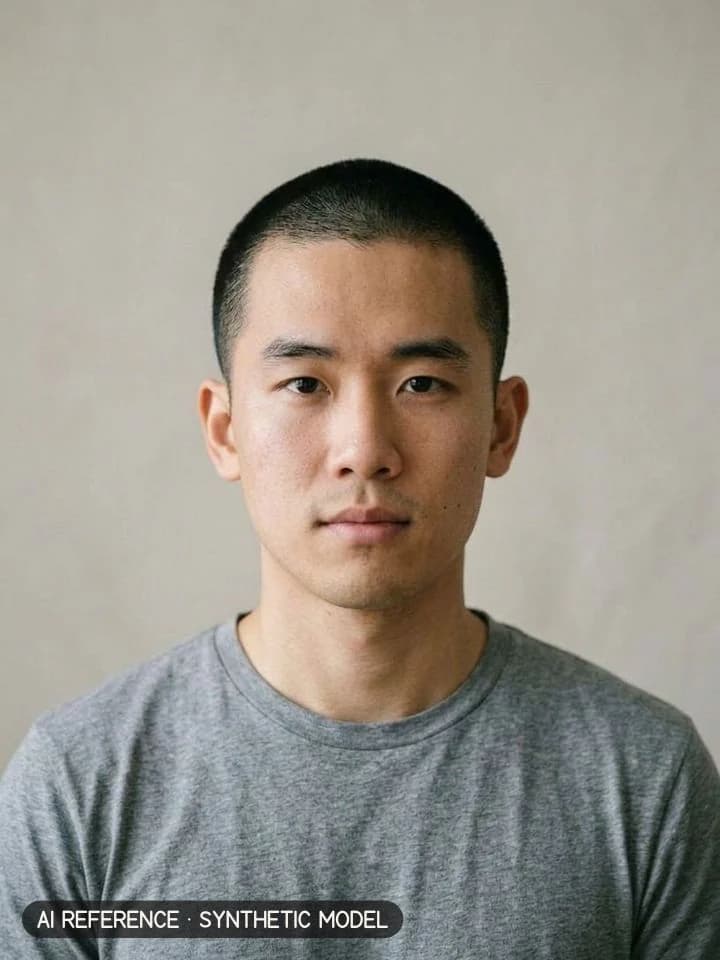
4. Buzz cut

88/100 fit

Best on 1A–4C · top 0.3–0.4 in (0.5–1 cm) · recut every 2–3 weeks

Why it ranks here

  • Keeps the top short enough to suit a stage-2 hairline.Barber consensus
  • Works with 2A waves instead of against them.Hair physics
  • Very short hair shows less contrast between thinner and fuller areas.Hair physics

When it doesn’t work

  • Puts bumps, a flat back of the head and prominent ears on show.
  • Scores lower if you have prominent ears.

Tell your barber

“#2 (6 mm) all over, or #3 top / #1 sides blended; tapered neckline; edge up.”

  1. #13 mm
  2. #26 mm
  3. #310 mm

Upkeep: trim every 2–3 weeks, about $510–$780 a year at $30 a cut.

Buzz cut on Model M1 (light skin · straight 1B hair · 20s). AI reference on a synthetic model — not a real person.Buzz cut on Model M4 (deep brown skin · coily 4C hair · 30s). AI reference on a synthetic model — not a real person.Buzz cut on Model M5 (light brown skin · curly 3B–3C hair · 20s). AI reference on a synthetic model — not a real person.

AI references on synthetic models, not real people

Best on 1A–4C · top 0–0.1 in (0 cm) · recut every 2–3 weeks

Why it ranks here

  • Keeps the top short enough to suit a stage-2 hairline.Barber consensus
  • Works with 2A waves instead of against them.Hair physics
  • In a study of first impressions, a clean-shaven head read as more dominant than visible thinning.Study

When it doesn’t work

  • Shows an irregular skull shape or scars. Trade-off from a US study (Mannes 2013): a shaved head reads as more dominant and about 4 years older, and scored lower on looks than a full head of hair.
  • Scores lower if you have prominent ears.

Tell your barber

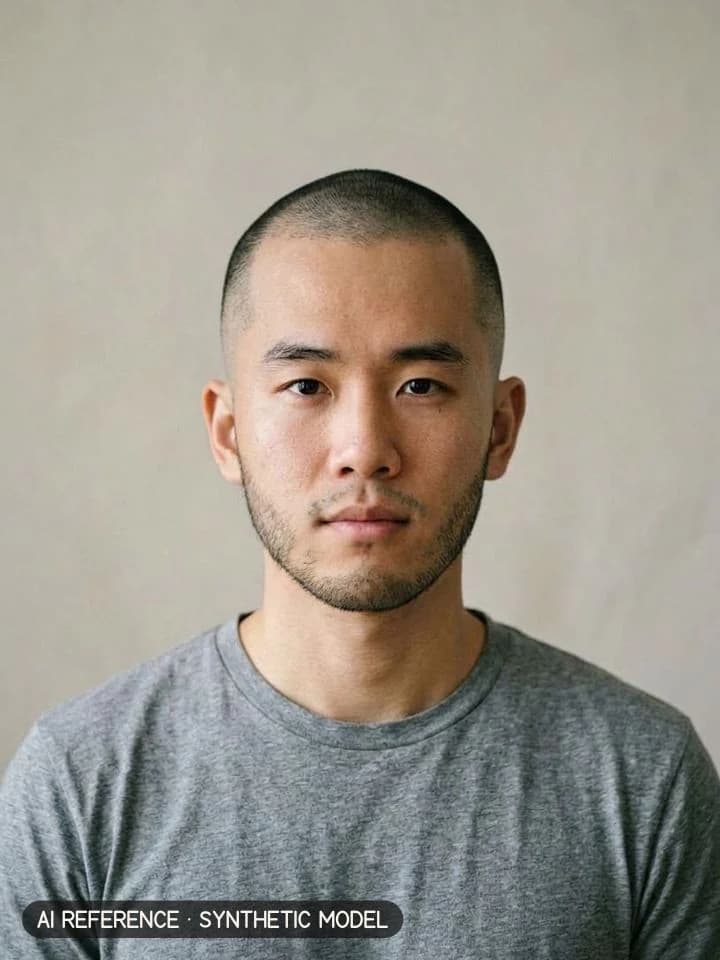
“Bald fade from 0 on sides; top foil or #0.5; blend into beard.”

  1. Skin0 mm
  2. #0.51.5 mm

Upkeep: trim every 2–3 weeks, about $510–$780 a year at $30 a cut.

Shaved head / bald fade on Model M1 (light skin · straight 1B hair · 20s). AI reference on a synthetic model — not a real person.Shaved head / bald fade on Model M5 (light brown skin · curly 3B–3C hair · 20s). AI reference on a synthetic model — not a real person.Shaved head / bald fade on Model M6 (dark brown skin · coily 4A hair with some gray · 50s). AI reference on a synthetic model — not a real person.

AI references on synthetic models, not real people
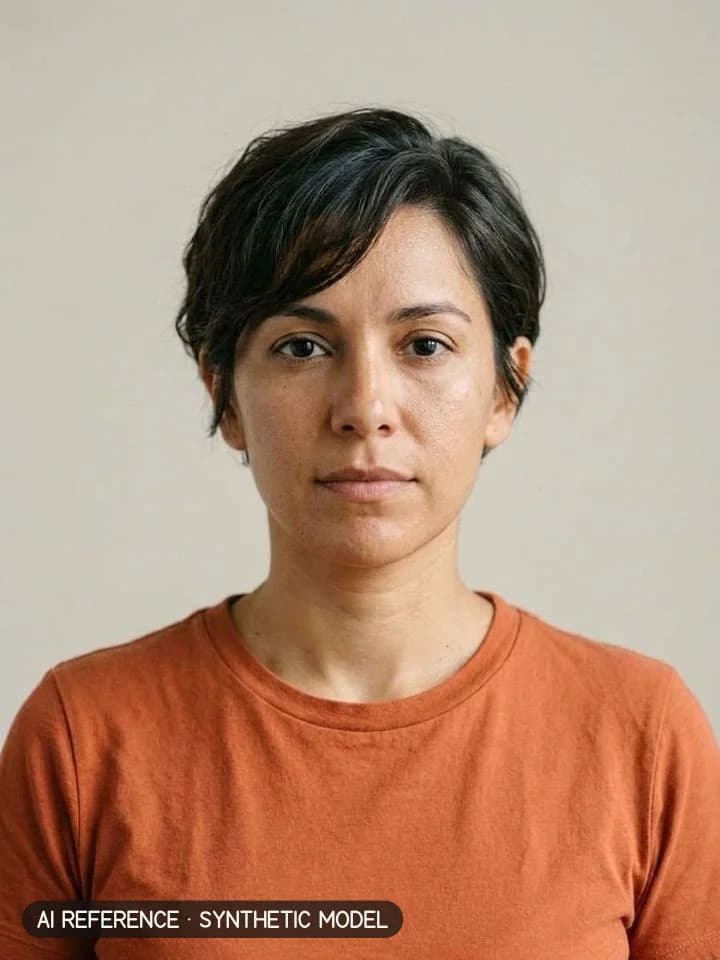
6. Quiff

74/100 fit

Best on 1B–2C · top 1.5–4 in (4–10 cm) · recut every 3–5 weeks

Why it ranks here

  • Works with 2A waves instead of against them.Hair physics

The shape relies on thicker hair; with lower density it can look thin in places.

When it doesn’t work

  • Long or oblong faces; fine, low-density hair; hidden from hairline stage 3.
  • 3B–4C hair (curly and coily): the shape depends on a texture it can't hold, so we rule it out.
  • Low-density hair: the cut relies on bulk that thin hair doesn't have.

Tell your barber

“Front 3–4 in graduating to 1.5 in at crown; mid fade or taper; texturize the front.”

Upkeep: trim every 3–5 weeks, about $300–$510 a year at $30 a cut.

Quiff on Model M1 (light skin · straight 1B hair · 20s). AI reference on a synthetic model — not a real person.Quiff on Model M2 (fair skin · fine-wavy 2A hair with some gray · 40s). AI reference on a synthetic model — not a real person.Quiff on Model M3 (medium brown skin · thick wavy 2B–2C hair · 30s). AI reference on a synthetic model — not a real person.

AI references on synthetic models, not real people
Popular cuts this profile should skip

  • Curtains / middle part: ranks low for this profile: possible now, but at hairline stage 2 this cut is past its comfort zone (it suits up to stage 1) — plan for the next stage.
  • Slick back: ranks low for this profile: possible now, but at hairline stage 2 this cut is past its comfort zone (it suits up to stage 1) — plan for the next stage.
  • Pompadour: ranks low for this profile: possible now, but at hairline stage 2 this cut is past its comfort zone (it suits up to stage 1) — plan for the next stage.

Every cut the engine moves up or down

These are the catalog’s own feature rules, the same ones your analysis applies. Each nudges a cut’s score by a small, fixed amount; texture, density and hairline still decide more.

With low-density hair

Scores higher (8)

  • Blunt chin bobHair physics

    A blunt line keeps lower-density hair looking full at the ends.

  • Buzz / cropHair physics

    Very short hair shows less contrast between thinner and fuller areas.

  • Buzz cutHair physics

    Very short hair shows less contrast between thinner and fuller areas.

  • High and tightHair physics

    Very short hair shows less contrast between thinner and fuller areas.

  • Long one-lengthHair physics

    A blunt line keeps lower-density hair looking full at the ends.

  • Very short hair shows less contrast between thinner and fuller areas.

  • A stacked nape builds volume where lower-density hair needs it.

  • Textured cropHair physics

    Texture on top hides lower density better than a smooth finish.

Scores lower (13)

  • Butterfly cutHair physics

    Lots of layers can make lower-density hair look sparse.

  • Lower-density curls can show scalp in this shape unless it's cut with fewer layers.

  • Lower-density curls can show scalp in this shape unless it's cut with fewer layers.

  • Curly top + taperHair physics

    Lower-density curls can show scalp in this shape unless it's cut with fewer layers.

  • Relies on density for volume, so the scalp can show with lower-density hair.

  • Relies on density for volume, so the scalp can show with lower-density hair.

  • Relies on density for volume, so the scalp can show with lower-density hair.

  • PompadourHair physics

    Relies on density for volume, so the scalp can show with lower-density hair.

  • QuiffHair physics

    Relies on density for volume, so the scalp can show with lower-density hair.

  • ShagHair physics

    Lots of layers can make lower-density hair look sparse.

  • Slick backHair physics

    Relies on density for volume, so the scalp can show with lower-density hair.

  • Twists / starter locsBarber consensus

    Twists put tension on the roots, which lower-density hair handles less well.

  • Wolf cutHair physics

    Lots of layers can make lower-density hair look sparse.

With fine strands

Scores higher (6)

  • Blunt chin bobHair physics

    A blunt perimeter keeps fine hair looking thick at the ends.

  • Classic pixieHair physics

    A short, stacked shape gives fine hair lift at the crown.

  • Crew cutHair physics

    A short, even length makes fine hair look denser.

  • Long one-lengthHair physics

    A blunt perimeter keeps fine hair looking thick at the ends.

  • A short, stacked shape gives fine hair lift at the crown.

  • Textured cropHair physics

    Point-cut texture on top makes fine hair look fuller.

Scores lower (12)

Thinning hair: questions

What haircut makes thin hair look thicker?
A blunt, one-line perimeter at a shorter length, like a blunt bob, a lob or a stacked bob, makes the ends look denser because every strand ends in the same place. For men, short cuts with texture on top, like a textured crop, do the same job. Heavy layering removes bulk that thin hair can't spare.
Is a bob good for thinning hair?
Often, yes. Our engine favours the blunt chin bob, the stacked bob and the lob for a widening part: the blunt line reads as fuller, and a side part moves attention off the part line. A heavy long one-length cut and a centre part do the opposite.
Should I cut my hair short if it's thinning?
Shorter usually helps because long hair separates and shows more scalp, but you don't need to go all the way. The ranked examples on this page show what the engine picks for a thinning profile when you're open to any length.
Does layering help thin hair?
Light layering on top can add movement, but heavy layering and V-shaped long layers remove the bulk that makes thin hair look full, so the engine marks those down for low density and fine strands.