The 10 men's cuts that do the most for oval proportions
Proportion scores (0–100) from the engine’s ranking on proportions alone. In a full analysis proportions are about 15% of the score; your hair and your routine decide the rest.
Not sorted by score alone: the #1 spot goes to a widely worn cut when one scores within 8 points of the top, and the list always mixes more than one length.
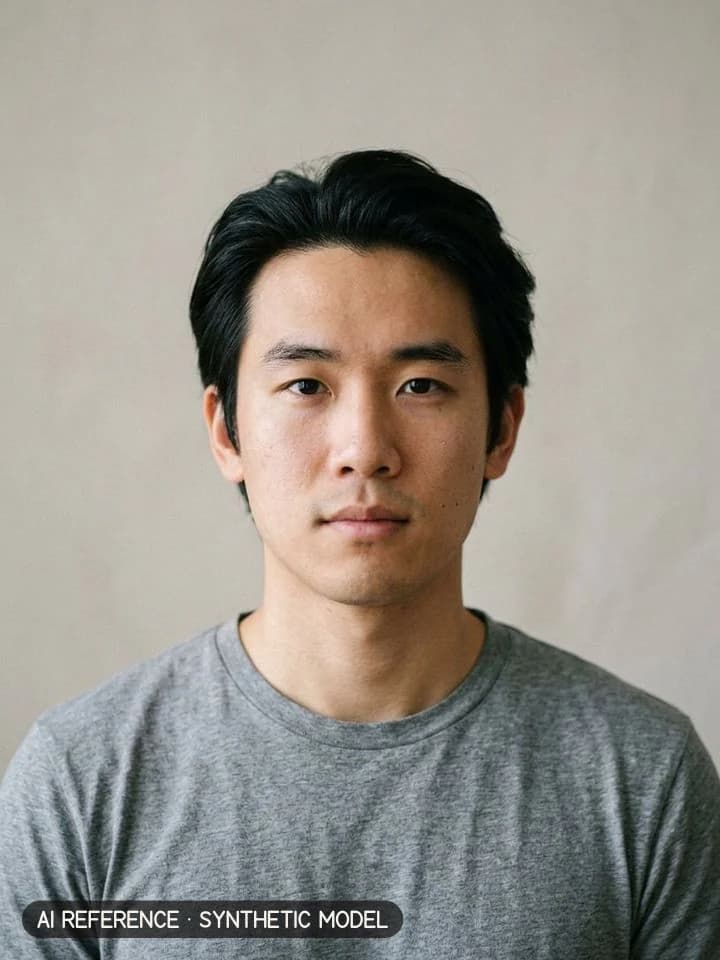
01
Best on straight to curly hair · 2–3 in (5–7.5 cm) on top · recut every 4–6 weeks
Why it ranks here
- No proportion rule applies strongly here, so it ranks on how many hair types it works for.
When it doesn’t work
- Few — it is the default for a reason.
- Curly to coily hair: the shape needs a texture it can't hold, so we rule it out.
- A receding hairline and a thinning crown or more: we flag it one step past its limit and stop suggesting it after that.
Tell your barber
“Scissor-over-comb taper, not a skin fade; top 2–3 in side-swept; natural tapered neckline.”
Upkeep: a trim every 4–6 weeks, about $270–$390 a year at $30 a cut.



AI references on synthetic models, not real people
02
Best on straight to wavy hair · 1–2 in (2.5–5 cm) on top · recut every 2–3 weeks
Why it ranks here
- Adds straight lines and sharp edges, which balances a soft, rounded jaw.Stylist rule of thumb
- Keeps the cheek line slim, which balances prominent cheekbones.Stylist rule of thumb
When it doesn’t work
- A low forehead, a front cowlick, prominent ears (skin fade); the hard front line shows temple recession from stage 3; trend-dependent (Janif 2014).
- Curly to coily hair: the shape needs a texture it can't hold, so we rule it out.
- Low-density hair: the cut relies on bulk that thin hair doesn't have.
Tell your barber
“High or mid skin fade (drop or burst optional); top 1–2 in, textured; blunt fringe cut straight across with a sharp line-up.”
Upkeep: a trim every 2–3 weeks, about $510–$780 a year at $30 a cut.


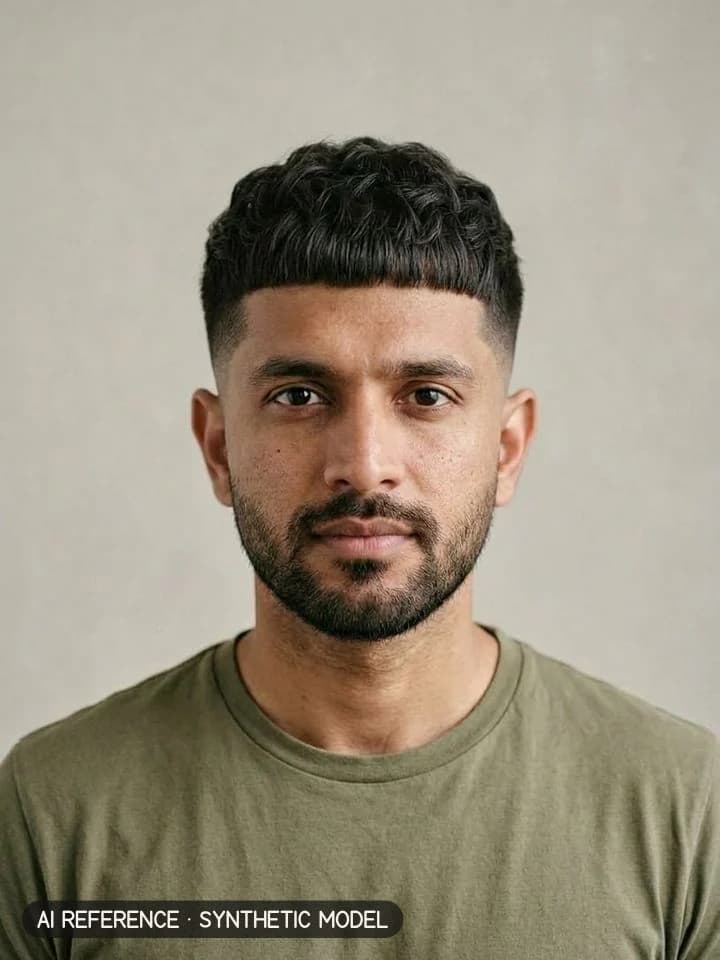
AI references on synthetic models, not real people
03
Best on wavy to curly hair · 2–3 in (5–7.5 cm) on top · recut every 4–6 weeks
Why it ranks here
- Puts weight at the jawline, which balances prominent cheekbones.Stylist rule of thumb
When it doesn’t work
- A short, thick neck; conservative workplaces; trend-dependent (Janif 2014: rarer looks rate higher).
- Coily hair: the shape needs a texture it can't hold, so we rule it out.
- Low-density hair: the cut relies on bulk that thin hair doesn't have.
Tell your barber
“Taper or burst fade around the ears; textured top 2–3 in; leave 2–4 in at the nape, blended not shelved.”
Upkeep: a trim every 4–6 weeks, about $270–$390 a year at $30 a cut.



AI references on synthetic models, not real people
04
Best on any texture hair · 0.3–0.4 in (0.5–1 cm) on top · recut every 2–3 weeks
Why it ranks here
- Adds straight lines and sharp edges, which balances a soft, rounded jaw.Stylist rule of thumb
When it doesn’t work
- Puts bumps, a flat back of the head and prominent ears on show.
- Scores lower if you have prominent ears.
Tell your barber
“#2 (6 mm) all over, or #3 top / #1 sides blended; tapered neckline; edge up.”
Upkeep: a trim every 2–3 weeks, about $510–$780 a year at $30 a cut.
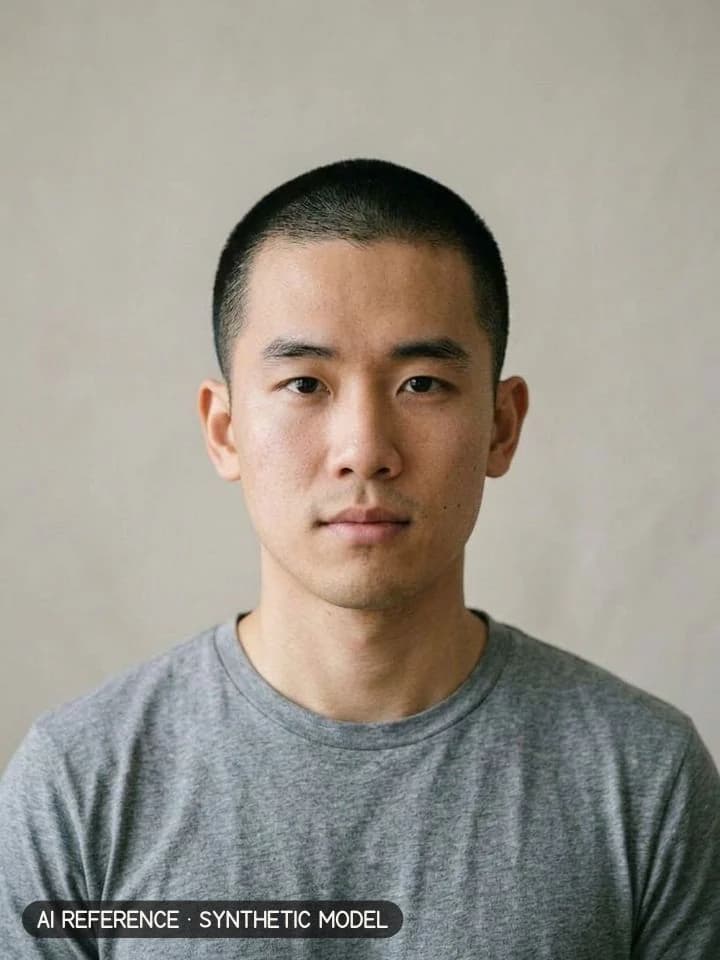


AI references on synthetic models, not real people
05
Best on straight to curly hair · 1–2 in (2.5–5 cm) on top · recut every 3–4 weeks
Why it ranks here
- Adds straight lines and sharp edges, which balances a soft, rounded jaw.Stylist rule of thumb
When it doesn’t work
- A low forehead; a very round face if the top is left flat.
- Coily hair: the shape needs a texture it can't hold, so we rule it out.
- A receding hairline and a thinning crown or more: we flag it one step past its limit and stop suggesting it after that.
Tell your barber
“Mid or high skin fade; top 1–2 in point-cut for texture; choppy fringe ~1 in above brows.”
Upkeep: a trim every 3–4 weeks, about $390–$510 a year at $30 a cut.


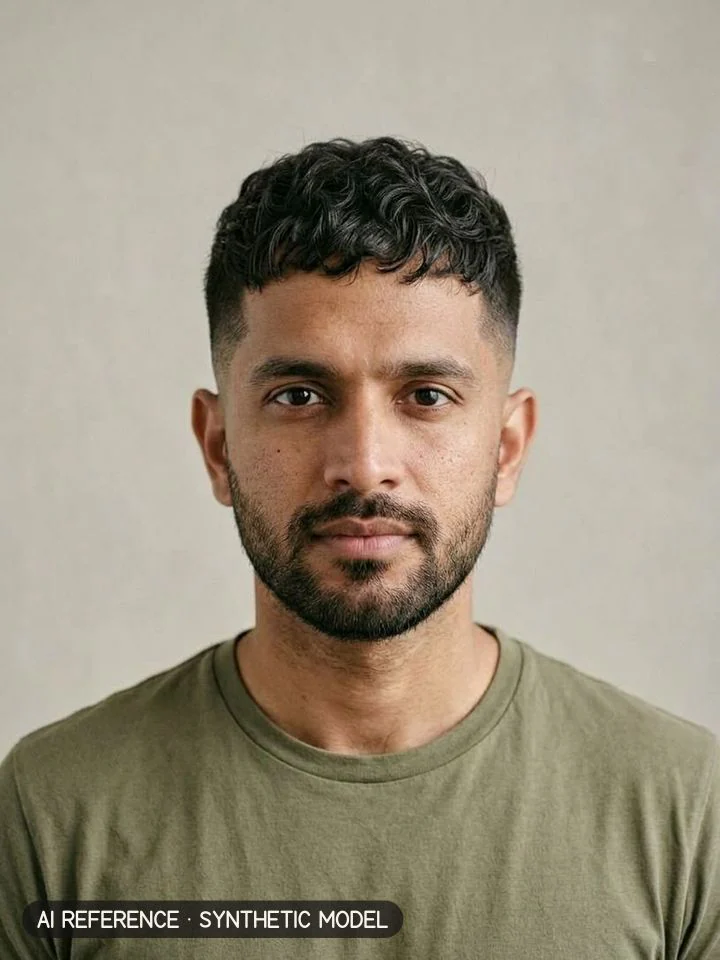
AI references on synthetic models, not real people
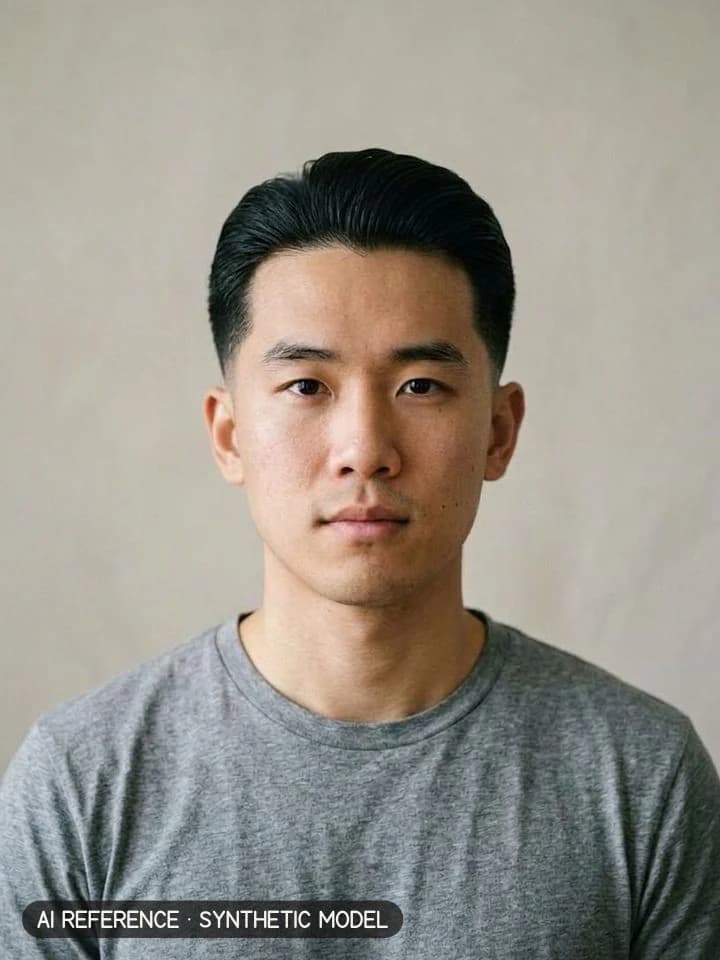
06
Best on straight to wavy hair · 3–5 in (7.5–12.5 cm) on top · recut every 4–6 weeks
Why it ranks here
- Adds straight lines and sharp edges, which balances a soft, rounded jaw.Stylist rule of thumb
When it doesn’t work
- Hidden from hairline stage 2; a high forehead, a prominent nose or a long face are all on show.
- Curly to coily hair: the shape needs a texture it can't hold, so we rule it out.
- Low-density hair: the cut relies on bulk that thin hair doesn't have.
Tell your barber
“Top 3–5 in, combed back; sides tapered #2–3 or undercut; keep weight at the crown.”
Upkeep: a trim every 4–6 weeks, about $270–$390 a year at $30 a cut.


AI references on synthetic models, not real people
07
Best on straight to wavy hair · 4–6 in (10–15 cm) on top · recut every 4–6 weeks
Why it ranks here
- No proportion rule applies strongly here, so it ranks on how many hair types it works for.
When it doesn’t work
- A prominent nose; an off-centre front cowlick; hidden from hairline stage 2.
- Curly to coily hair: the shape needs a texture it can't hold, so we rule it out.
- Low-density hair: the cut relies on bulk that thin hair doesn't have.
Tell your barber
“Top 4–6 in, centre part; fringe falls to the temples; scissor or low-taper sides; texturize the ends.”
Upkeep: a trim every 4–6 weeks, about $270–$390 a year at $30 a cut.



AI references on synthetic models, not real people
08
Best on straight to wavy hair · 4–7 in (10–18 cm) on top · recut every 2–4 weeks
Why it ranks here
- Adds straight lines and sharp edges, which balances a soft, rounded jaw.Stylist rule of thumb
- Keeps the cheek line slim, which balances prominent cheekbones.Stylist rule of thumb
When it doesn’t work
- Conservative workplaces, bumps on the sides, fine low-density hair, long faces when styled up.
- Curly to coily hair: the shape needs a texture it can't hold, so we rule it out.
- Low-density hair: the cut relies on bulk that thin hair doesn't have.
Tell your barber
“#1–2 sides and back, no blending; top 4–7 in; disconnection line at the parietal ridge.”
Upkeep: a trim every 2–4 weeks, about $390–$780 a year at $30 a cut.


AI references on synthetic models, not real people
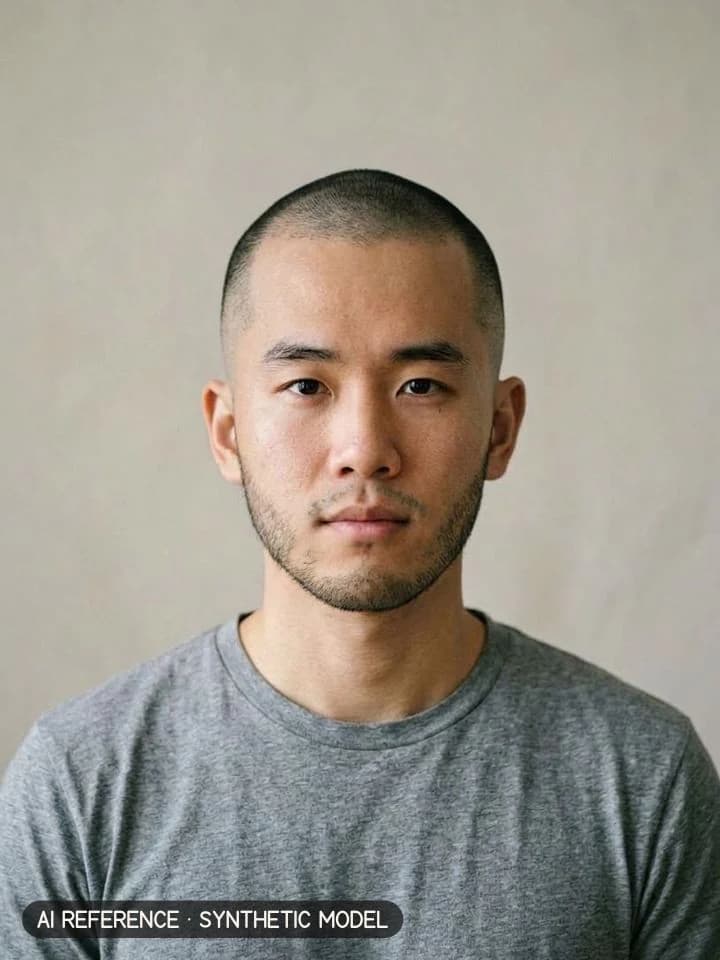
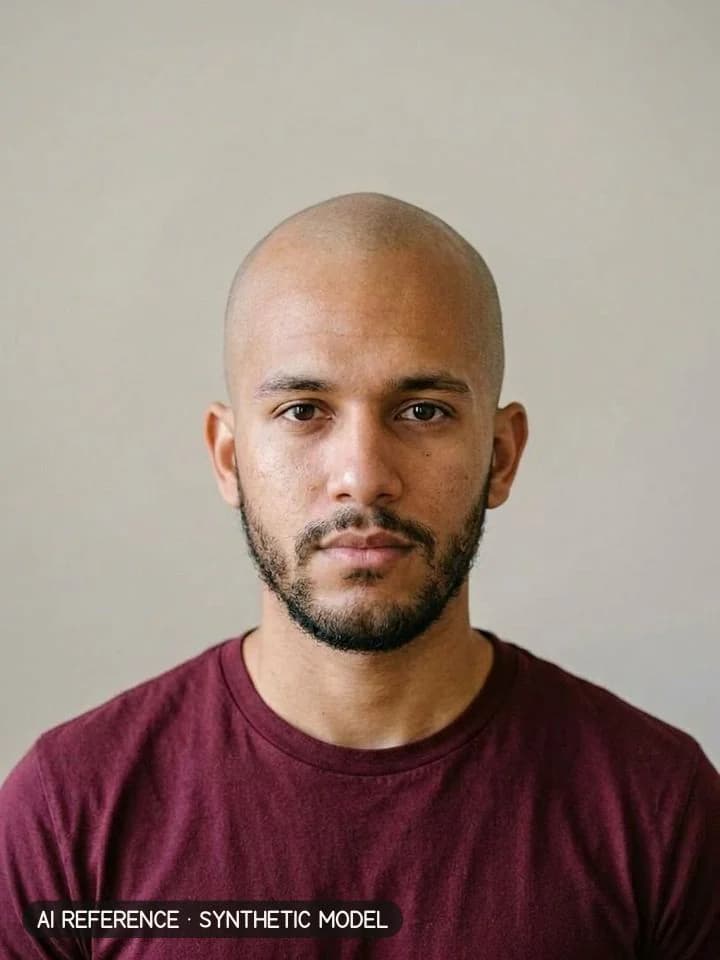
09
Best on any texture hair · 0–0.1 in (0 cm) on top · recut every 2–3 weeks
Why it ranks here
- Adds straight lines and sharp edges, which balances a soft, rounded jaw.Stylist rule of thumb
When it doesn’t work
- Shows an irregular skull shape or scars. Trade-off from a US study (Mannes 2013): a shaved head reads as more dominant and about 4 years older, and scored lower on looks than a full head of hair.
- Scores lower if you have prominent ears.
Tell your barber
“Bald fade from 0 on sides; top foil or #0.5; blend into beard.”
Upkeep: a trim every 2–3 weeks, about $510–$780 a year at $30 a cut.

AI references on synthetic models, not real people
10
Best on straight to wavy hair · 1–2 in (2.5–5 cm) on top · recut every 3–4 weeks
Why it ranks here
- Adds straight lines and sharp edges, which balances a soft, rounded jaw.Stylist rule of thumb
When it doesn’t work
- A low forehead, a front cowlick, a round face without fade contrast.
- Curly to coily hair: the shape needs a texture it can't hold, so we rule it out.
- A receding hairline and a thinning crown or more: we flag it one step past its limit and stop suggesting it after that.
Tell your barber
“Blunt straight fringe at mid-forehead; top 1–2 in; low or mid taper sides.”
Upkeep: a trim every 3–4 weeks, about $390–$510 a year at $30 a cut.



AI references on synthetic models, not real people
Your list, not a textbook face.
The free analysis adds your hair type, thickness and hairline, and names your best fit with the reason. Members get every pick explained, on their own face.