The 10 women's cuts that do the most for round proportions
Proportion scores (0–100) from the engine’s ranking on proportions alone. In a full analysis proportions are about 15% of the score; your hair and your routine decide the rest.
Not sorted by score alone: the #1 spot goes to a widely worn cut when one scores within 8 points of the top, and the list always mixes more than one length.
01
Best on straight, wavy and coily hair · 1–3 in (2.5–7.5 cm) on top · recut every 4–6 weeks
Why it ranks here
- Adds height on top, which balances a shorter, wider face.Stylist rule of thumb
- Keeps weight off the jawline, which balances a shorter, wider face.Stylist rule of thumb
When it doesn’t work
- A short neck, a jaw-heavy lower third, prominent ears, a crown cowlick, thick coarse hair (needs debulking); grows out awkwardly.
- Curly hair: the shape needs a texture it can't hold, so we rule it out.
- A receding hairline and a thinning crown or more: we flag it one step past its limit and stop suggesting it after that.
Tell your barber
“Top 1–3 in; tapered sides and nape; soft side fringe; debulk if thick.”
Upkeep: a trim every 4–6 weeks, about $270–$390 a year at $30 a cut.
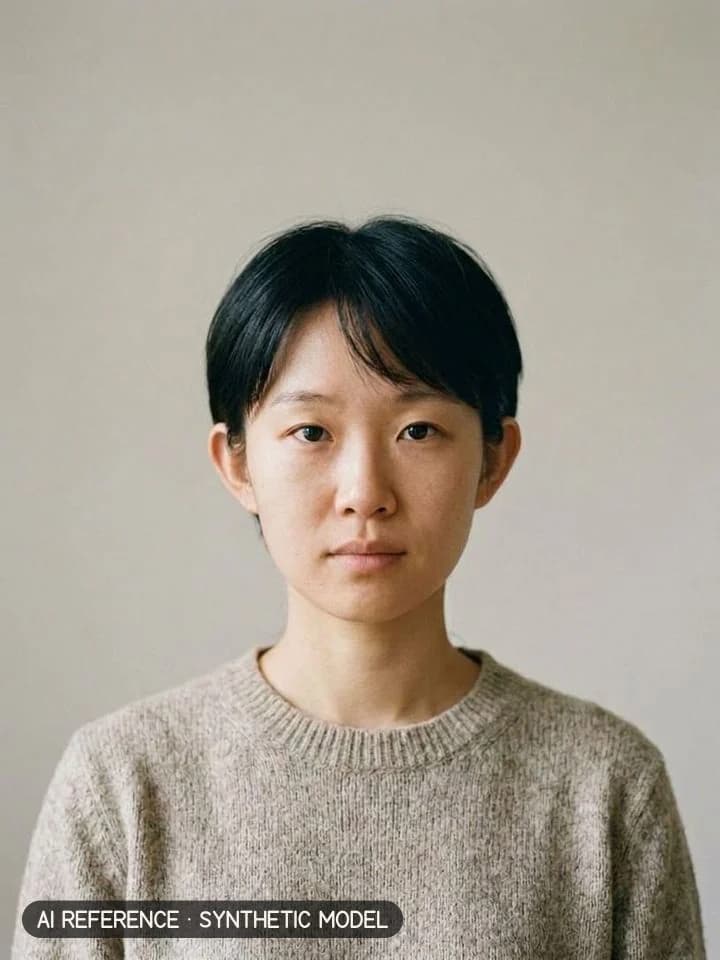
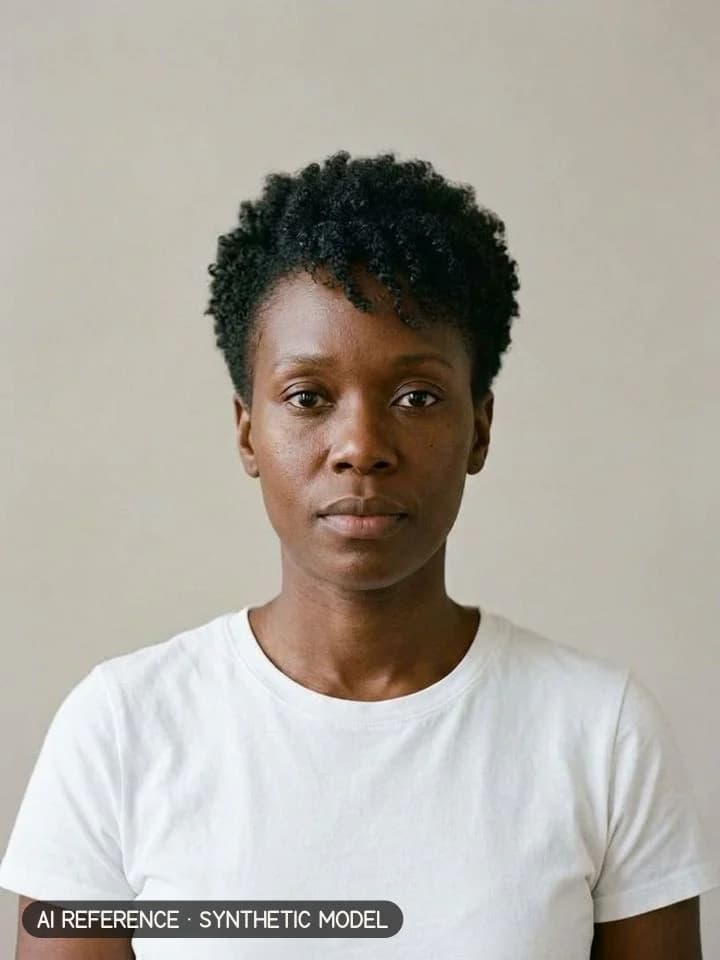
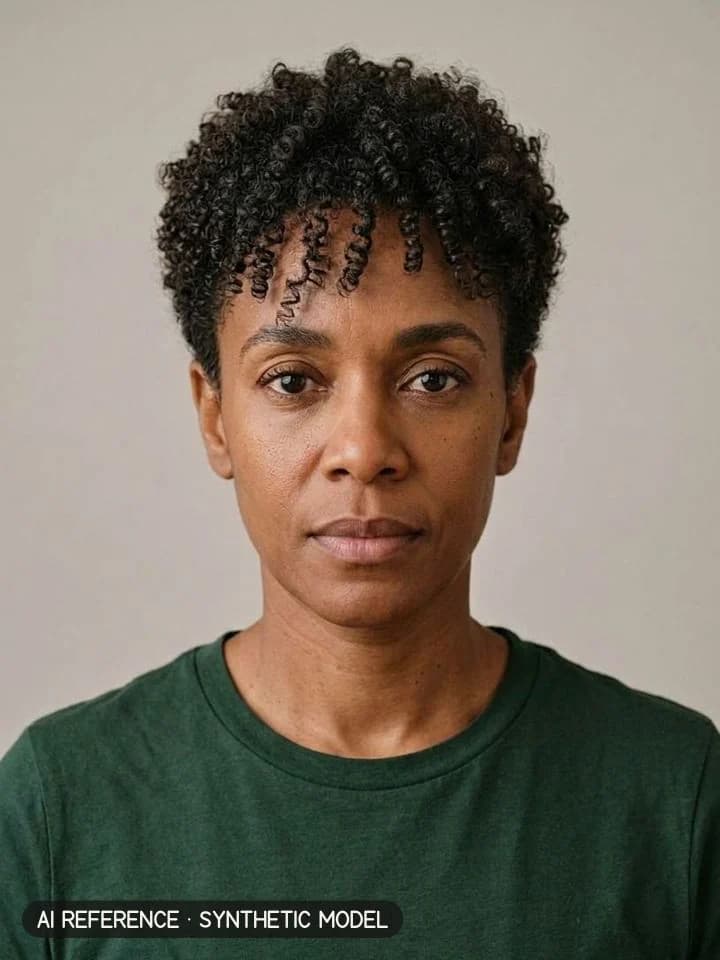
AI references on synthetic models, not real people
02
Best on straight to wavy hair · 6–10 in (15–25.5 cm) on top · recut every 5–7 weeks
Why it ranks here
- Adds height on top, which balances a shorter, wider face.Stylist rule of thumb
- Adds vertical length, which balances a shorter, wider face.Stylist rule of thumb
When it doesn’t work
- Long faces (keep the front at chin length); coarse curly hair puffs out.
- Curly to coily hair: the shape needs a texture it can't hold, so we rule it out.
- A receding hairline and a thinning crown or more: we flag it one step past its limit and stop suggesting it after that.
Tell your barber
“Graduated stacked nape; front longer at chin to collarbone; angle to taste.”
Upkeep: a trim every 5–7 weeks, about $210–$300 a year at $30 a cut.



AI references on synthetic models, not real people
03
Best on wavy to curly hair · 14–20 in (35.5–51 cm) on top · recut every 8–12 weeks
Why it ranks here
- Adds vertical length, which balances a shorter, wider face.Stylist rule of thumb
When it doesn’t work
- A long face worn flat with a centre part; fine hair (a V-shape thins the perimeter).
- Curly to coily hair: the shape needs a texture it can't hold, so we rule it out.
- Low-density hair: the cut relies on bulk that thin hair doesn't have.
Tell your barber
“Below-shoulder length; long layers from the chin down; U- or soft V-shape at the back.”
Upkeep: a trim every 8–12 weeks, about $120–$210 a year at $30 a cut.


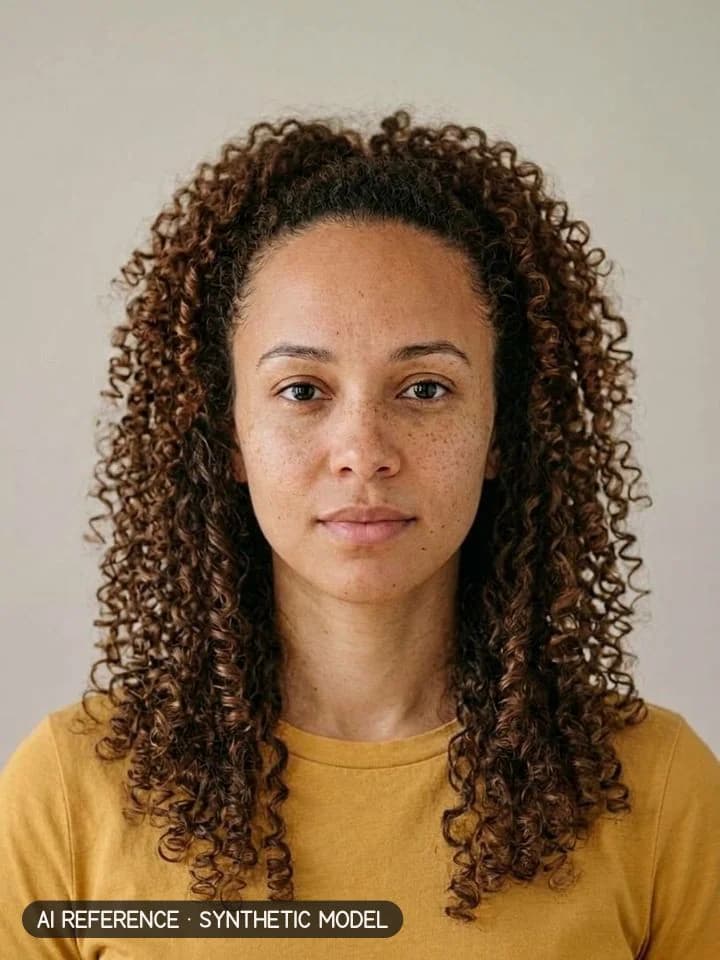
AI references on synthetic models, not real people
04
Best on straight to wavy hair · 16–24 in (40.5–61 cm) on top · recut every 10–12 weeks
Why it ranks here
- Adds vertical length, which balances a shorter, wider face.Stylist rule of thumb
- Adds straight lines and sharp edges, which balances a soft, rounded jaw.Stylist rule of thumb
When it doesn’t work
- Long faces; thick coarse or 3A+ hair (turns into a triangle).
- Wavy to coily hair: the shape needs a texture it can't hold, so we rule it out.
- A hairline a little higher at the temples or more: we flag it one step past its limit and stop suggesting it after that.
Tell your barber
“One length, blunt perimeter; dust the ends; no internal layers.”
Upkeep: a trim every 10–12 weeks, about $120–$150 a year at $30 a cut.



AI references on synthetic models, not real people
05
Best on straight to wavy hair · 6–8 in (15–20.5 cm) on top · recut every 8–10 weeks
Why it ranks here
- Adds height on top, which balances a shorter, wider face.Stylist rule of thumb
- Adds vertical length, which balances a shorter, wider face.Stylist rule of thumb
When it doesn’t work
- Fine low-density hair, 3C+ hair, no heat tools (it needs a blowout).
- Curly to coily hair: the shape needs a texture it can't hold, so we rule it out.
- Low-density hair: the cut relies on bulk that thin hair doesn't have.
Tell your barber
“Keep length; short face-framing layers from the cheekbone; long layers; for round-brush blowouts.”
Upkeep: a trim every 8–10 weeks, about $150–$210 a year at $30 a cut.



AI references on synthetic models, not real people
06
Best on coily hair · 1–3 in (2.5–7.5 cm) on top · recut every 3–6 weeks
Why it ranks here
- Adds height on top, which balances a shorter, wider face.Stylist rule of thumb
- Keeps the temples tight, which balances a shorter, wider face.Stylist rule of thumb
When it doesn’t work
- A very long face (keep the sides fuller).
- Straight to curly hair: the shape needs a texture it can't hold, so we rule it out.
- A receding hairline and a thinning crown or more: we flag it one step past its limit and stop suggesting it after that.
Tell your barber
“Top 1–3 in shaped; tapered sides and nape; define with coils.”
Upkeep: a trim every 3–6 weeks, about $270–$510 a year at $30 a cut.


AI references on synthetic models, not real people
07
Best on straight to curly hair · 10–12 in (25.5–30.5 cm) on top · recut every 8–10 weeks
Why it ranks here
- Adds vertical length, which balances a shorter, wider face.Stylist rule of thumb
When it doesn’t work
- Few — a dependable middle ground.
- Curly to coily hair: the shape needs a texture it can't hold, so we rule it out.
- A clearly receding hairline or more: we flag it one step past its limit and stop suggesting it after that.
Tell your barber
“Collarbone length; blunt or light long layers; bevel the ends under or out.”
Upkeep: a trim every 8–10 weeks, about $150–$210 a year at $30 a cut.


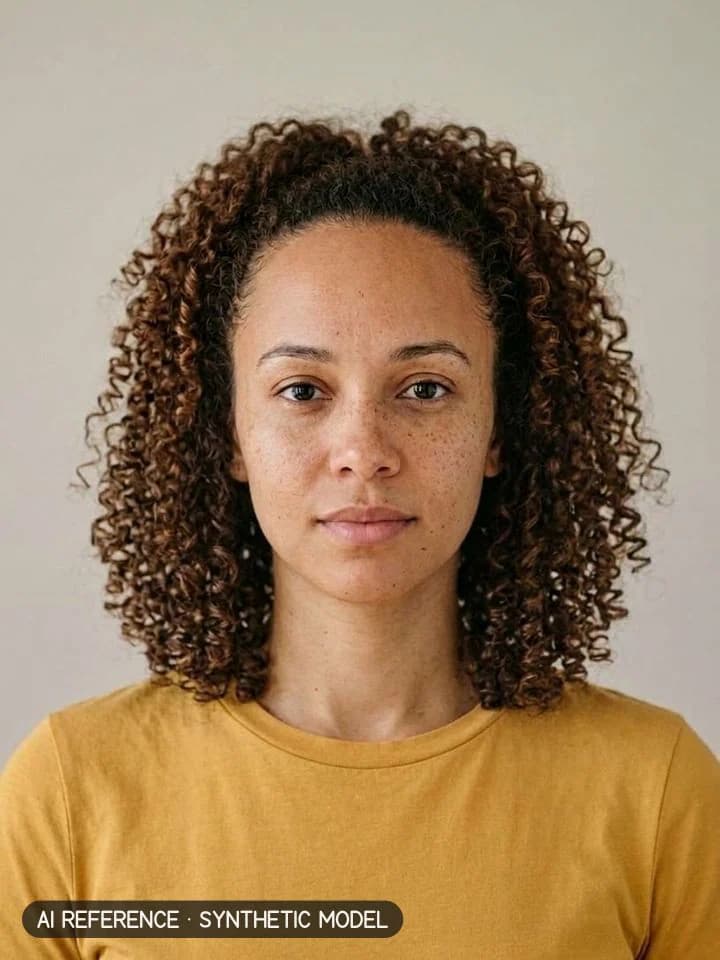
AI references on synthetic models, not real people
08
Best on straight to curly hair · 4–8 in (10–20.5 cm) on top · recut every 6–8 weeks
Why it ranks here
- Adds height on top, which balances a shorter, wider face.Stylist rule of thumb
- Adds vertical length, which balances a shorter, wider face.Stylist rule of thumb
When it doesn’t work
- Near universal.
- Curly to coily hair: the shape needs a texture it can't hold, so we rule it out.
- A clearly receding hairline or more: we flag it one step past its limit and stop suggesting it after that.
Tell your barber
“Deep diagonal part; long side-swept fringe blending into layers.”
Upkeep: a trim every 6–8 weeks, about $210–$270 a year at $30 a cut.


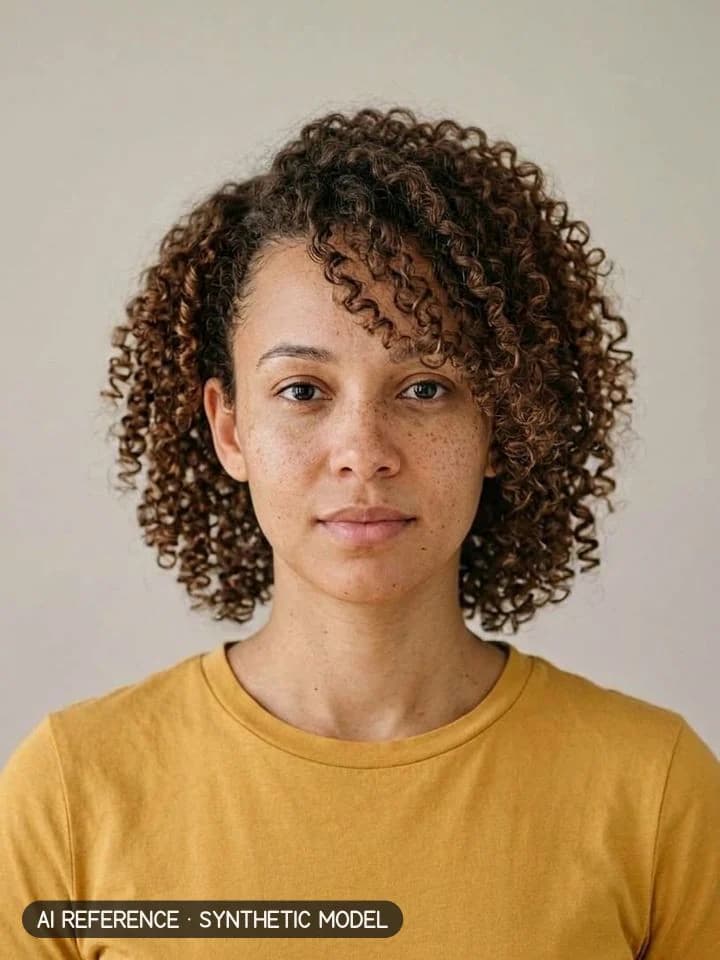
AI references on synthetic models, not real people
09
Best on wavy to curly hair · 3–5 in (7.5–12.5 cm) on top · recut every 6–8 weeks
Why it ranks here
- Adds height on top, which balances a shorter, wider face.Stylist rule of thumb
- Adds vertical length, which balances a shorter, wider face.Stylist rule of thumb
When it doesn’t work
- Fine low-density hair, round faces, a conservative look; trend-dependent (Janif 2014: rarer looks rate higher).
- Straight and coily hair: the shape needs a texture it can't hold, so we rule it out.
- Low-density hair: the cut relies on bulk that thin hair doesn't have.
Tell your barber
“Heavy crown layers; thinned-out lengths; mullet-ish back; curtain bangs.”
Upkeep: a trim every 6–8 weeks, about $210–$270 a year at $30 a cut.



AI references on synthetic models, not real people
10
Best on straight to wavy hair · 2–4 in (5–10 cm) on top · recut every 5–7 weeks
Why it ranks here
- Adds height on top, which balances a shorter, wider face.Stylist rule of thumb
- Keeps weight off the jawline, which balances a shorter, wider face.Stylist rule of thumb
When it doesn’t work
- Very thick, coarse hair needs debulking.
- Curly to coily hair: the shape needs a texture it can't hold, so we rule it out.
- A receding hairline and a thinning crown or more: we flag it one step past its limit and stop suggesting it after that.
Tell your barber
“2–4 in top and sides, ears half covered; tapered nape; long side-swept fringe.”
Upkeep: a trim every 5–7 weeks, about $210–$300 a year at $30 a cut.

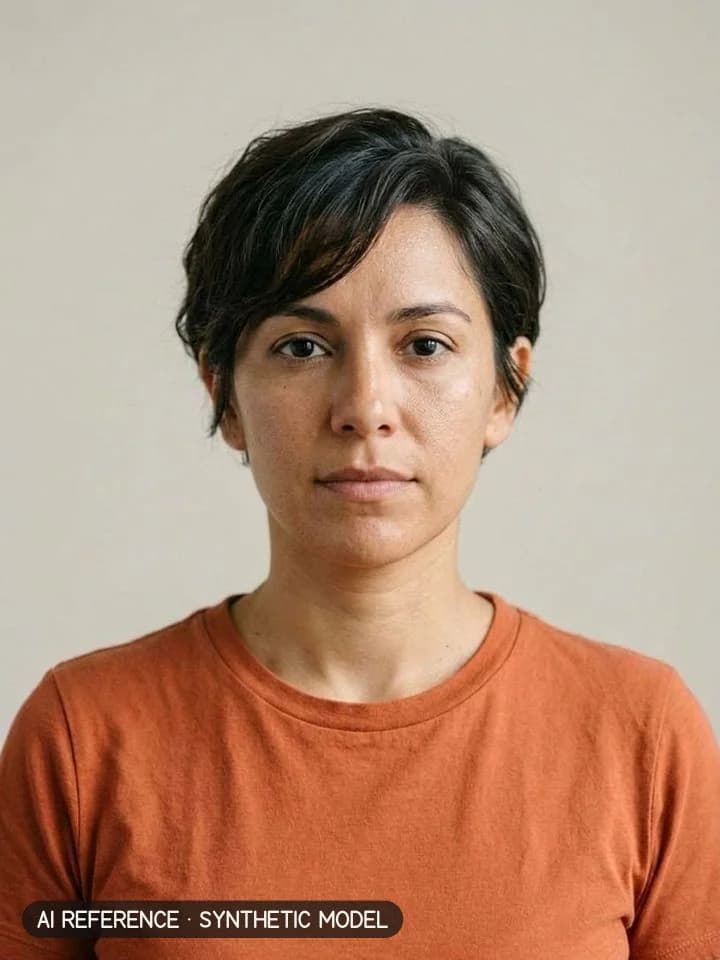

AI references on synthetic models, not real people
Your list, not a textbook face.
The free analysis adds your hair type, thickness and hairline, and names your best fit with the reason. Members get every pick explained, on their own face.