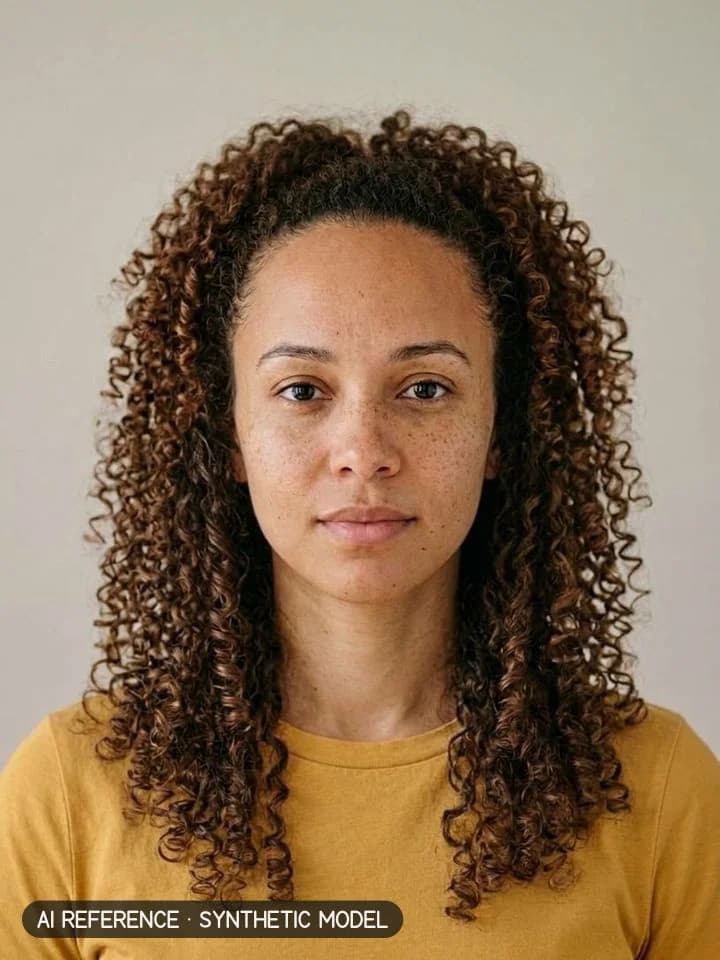
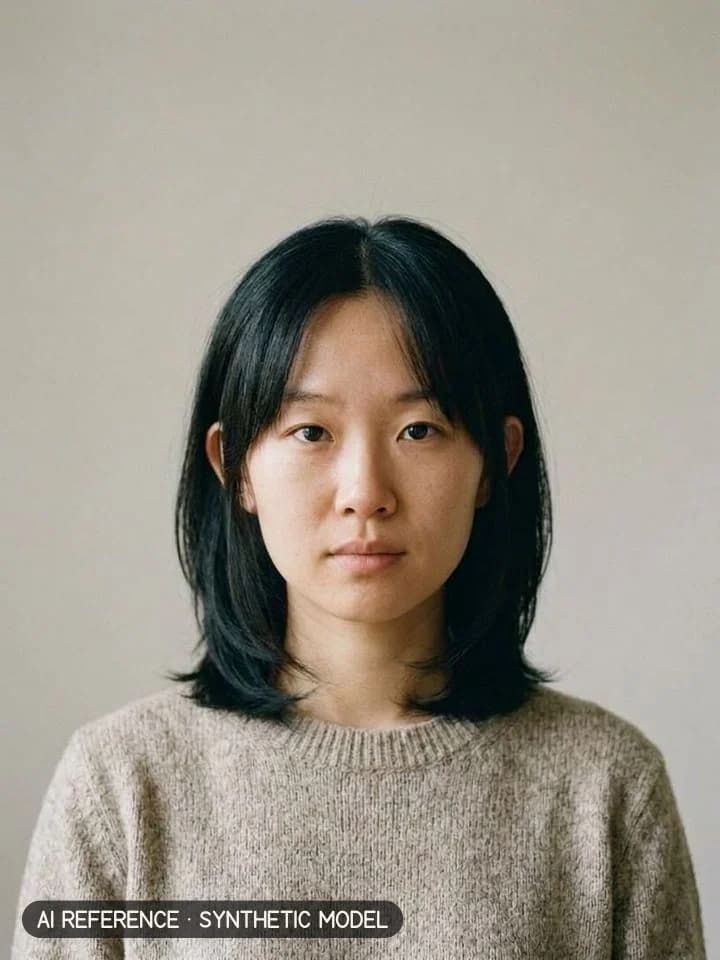
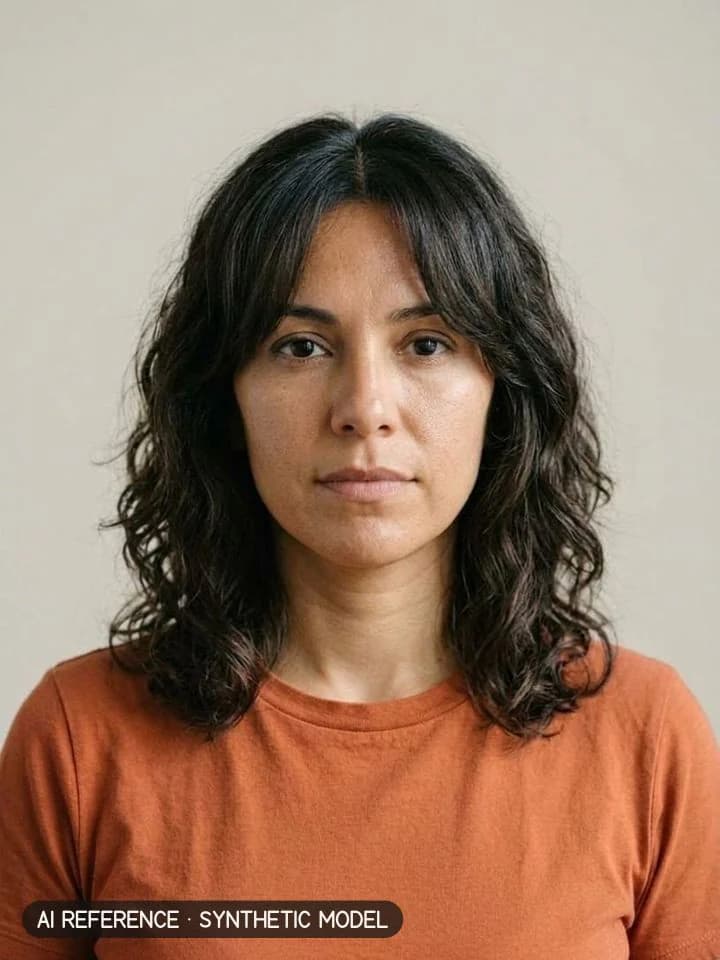
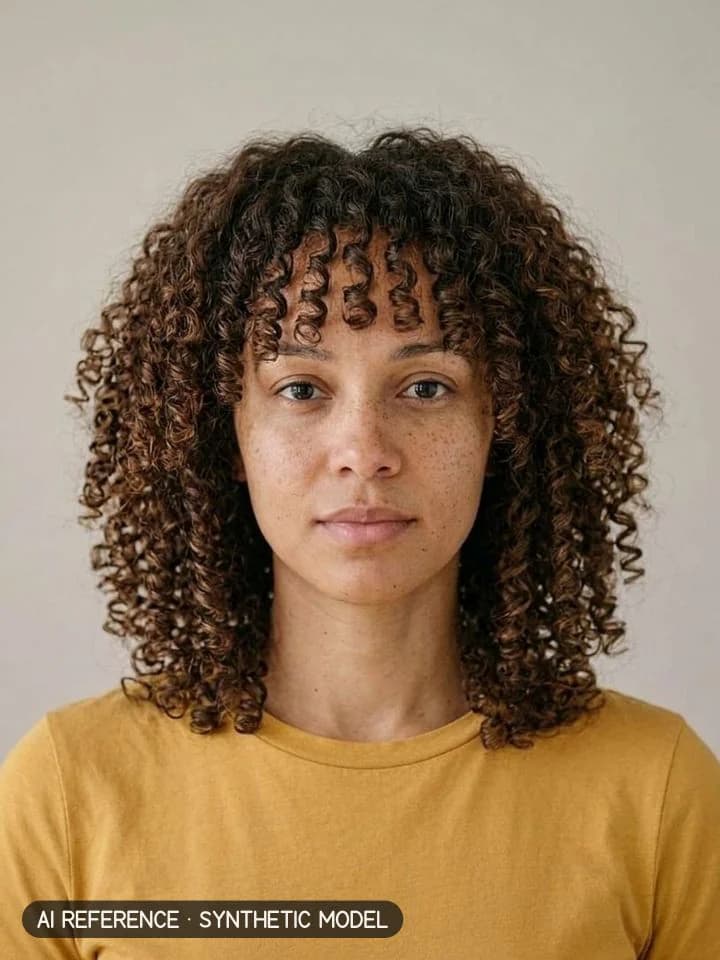
Skip to content

women's cuts · Square face · proportions only

Best haircuts for square faces (women), ranked by face-analysis data

The top 10 women's cuts from our catalog for a textbook square face, ranked by the same scorer that runs your analysis. Each one says why it works, when it doesn’t, what to tell your barber, and what it costs to keep.

Are you actually square?

Check in 10 seconds, in your browser. Your photo never leaves your phone.

Line drawing of a textbook square face with forehead, cheekbone, jaw and length measurement linesFWCWJWL

Our engine’s reading of this face

  • Square91%
  • Oval9%

How we classify a square face

Length ÷ width
about 1.0 to 1.25
Widest point
none; widths are even
Forehead ÷ jaw
close to 1.0
Jaw corner
sharp and angular (high angularity)

The ratios: length ÷ width (LW), forehead ÷ jaw (FJ), cheekbone prominence (CK), jaw angularity (ANG). We report shape as a mix, never a single label, because the categories are a stylists’ convention with fuzzy borders. More on the square face shape.

The 10 women's cuts that do the most for square proportions

Proportion scores (0–100) from the engine’s geometry-only ranking. In a full analysis proportions are about 15% of the score; texture, density, hairline and your routine decide the rest.

1. Butterfly cut

65/100 proportion score

Best on 1B–2C · top 6–8 in (15–20.5 cm) · recut every 8–10 weeks

Why it ranks here

  • Adds curves and softness, which balances an angular jaw.Stylist convention
  • Adds vertical length, which balances a shorter, wider face.Stylist convention

When it doesn’t work

  • Fine low-density hair, 3C+ hair, no heat tools (it needs a blowout).
  • 1A, 3A–4C hair (straight, curly and coily): the shape depends on a texture it can't hold, so we rule it out.
  • Low-density hair: the cut relies on bulk that thin hair doesn't have.

Tell your barber

“Keep length; short face-framing layers from the cheekbone; long layers; for round-brush blowouts.”

Upkeep: trim every 8–10 weeks, about $150–$210 a year at $30 a cut.
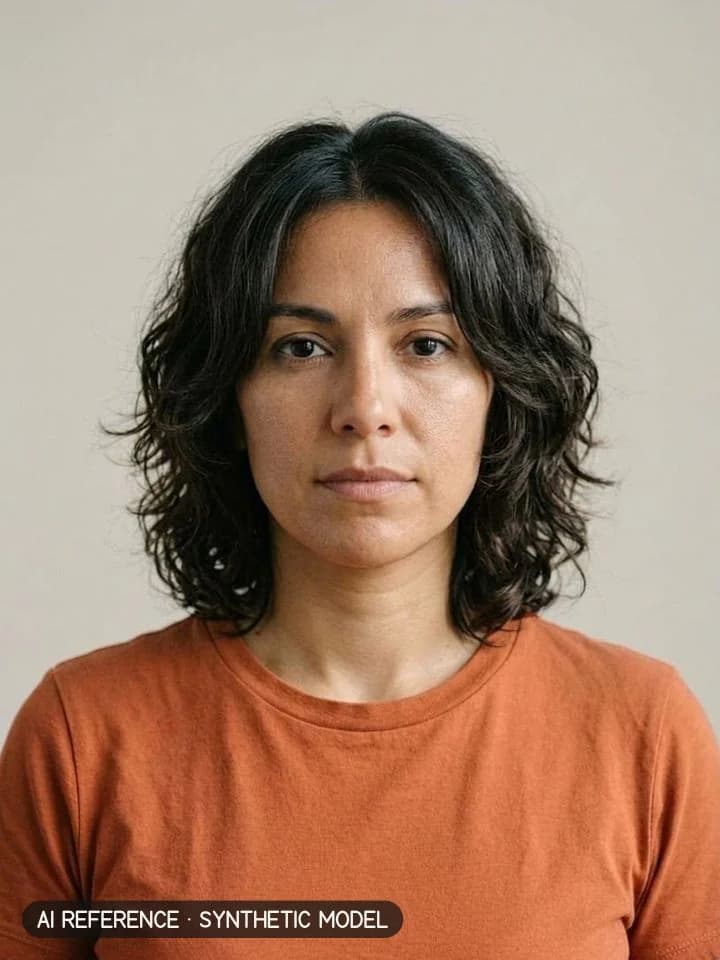
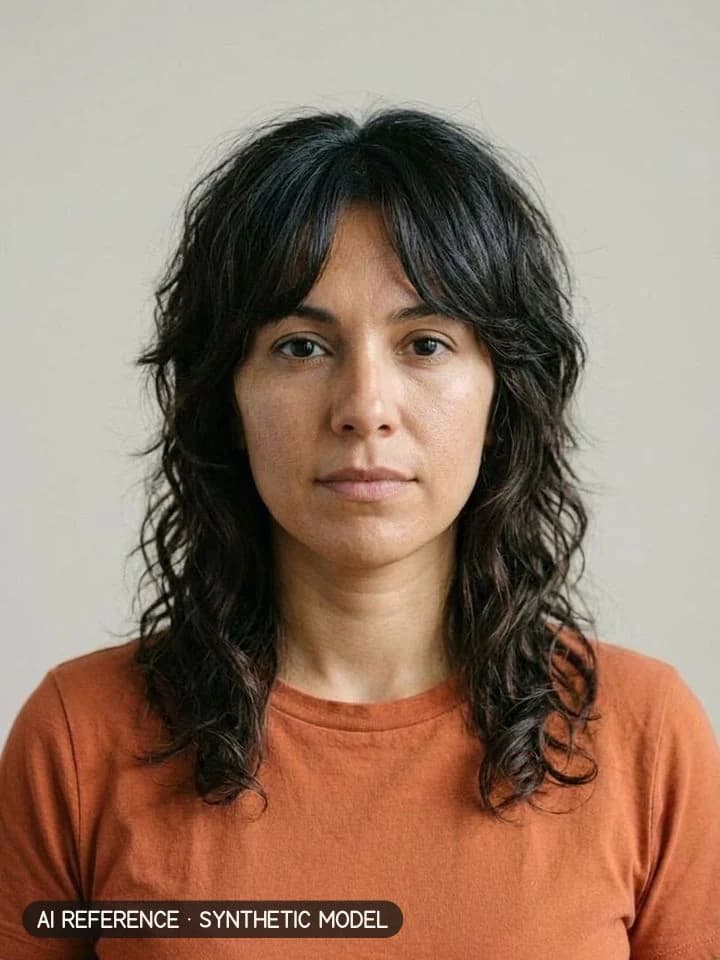
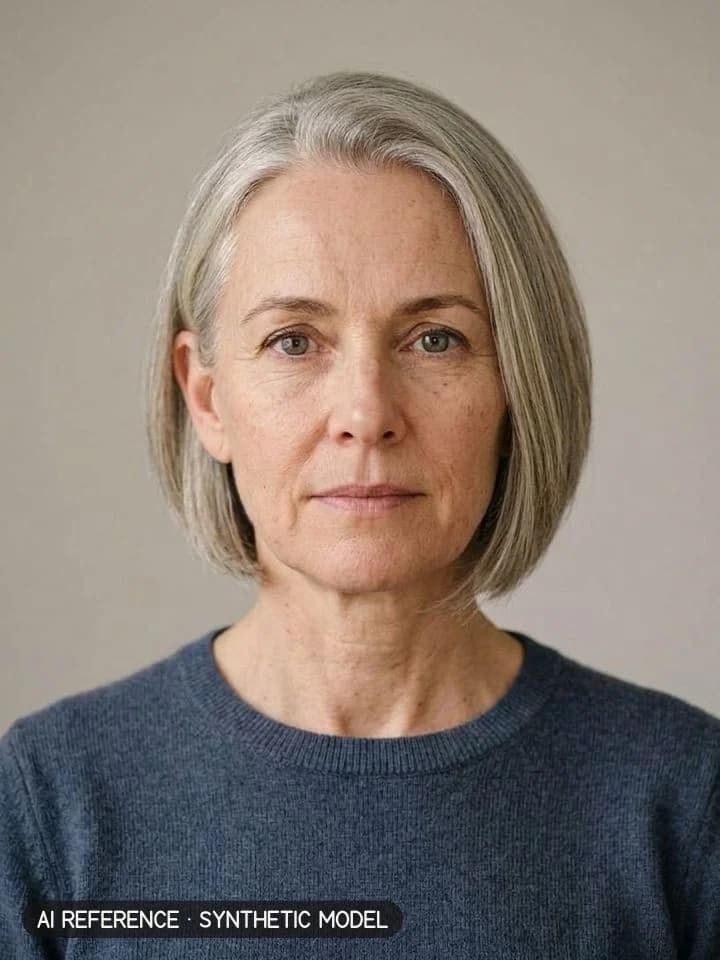
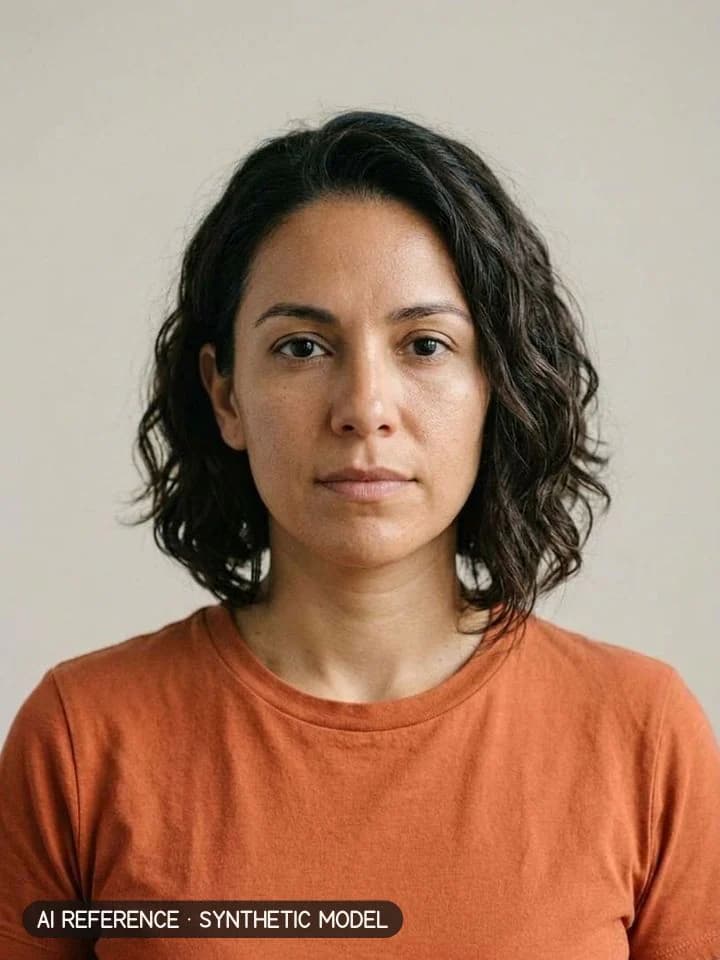
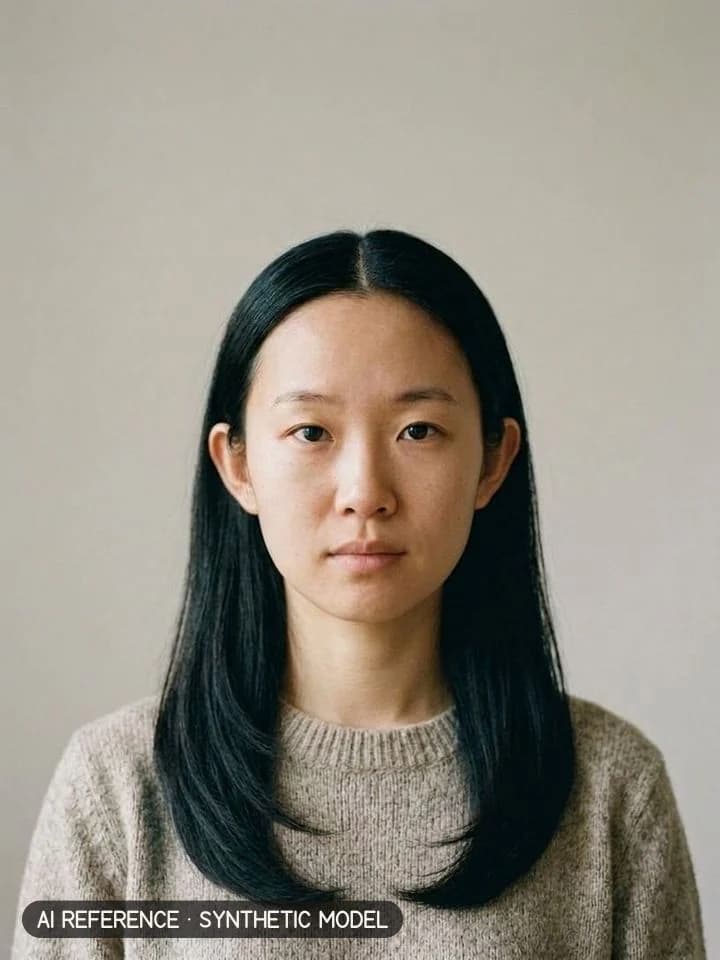
Butterfly cut on Model W1 (light skin · straight 1B hair · 20s). AI reference on a synthetic model — not a real person.Butterfly cut on Model W2 (fair skin · straight 1C hair with silver strands · 50s). AI reference on a synthetic model — not a real person.Butterfly cut on Model W3 (olive skin · wavy 2A–2B hair · 30s). AI reference on a synthetic model — not a real person.

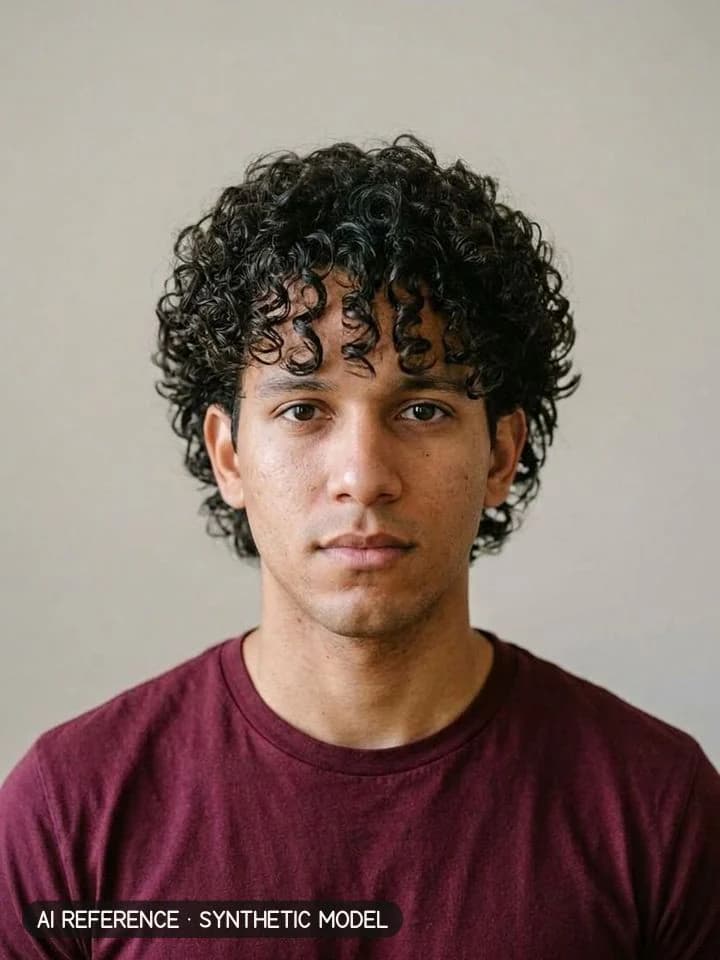
AI references on synthetic models, not real people
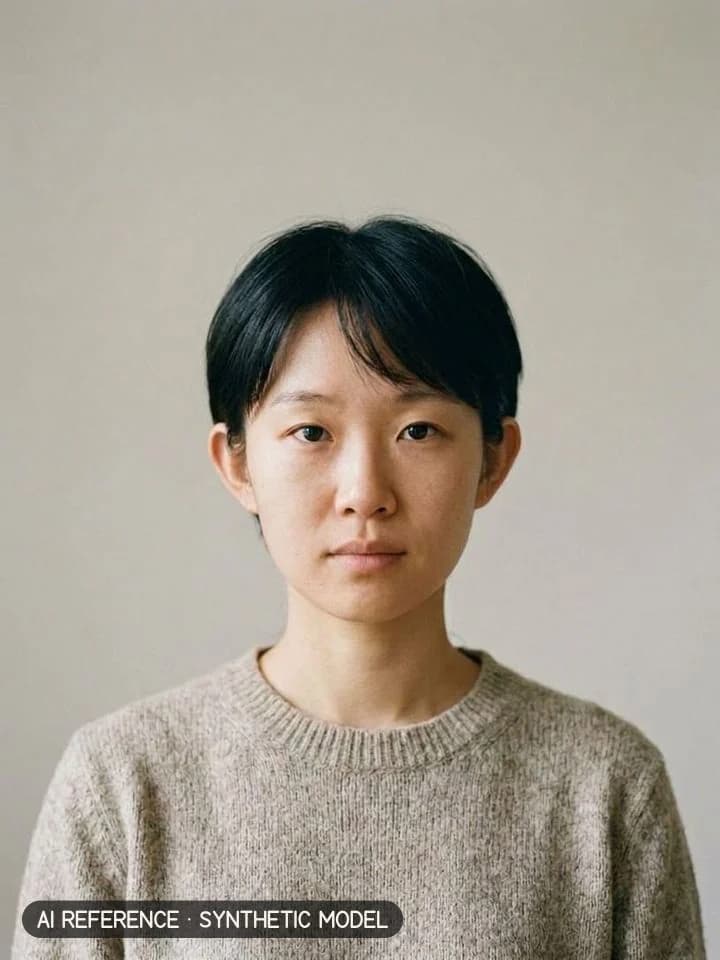
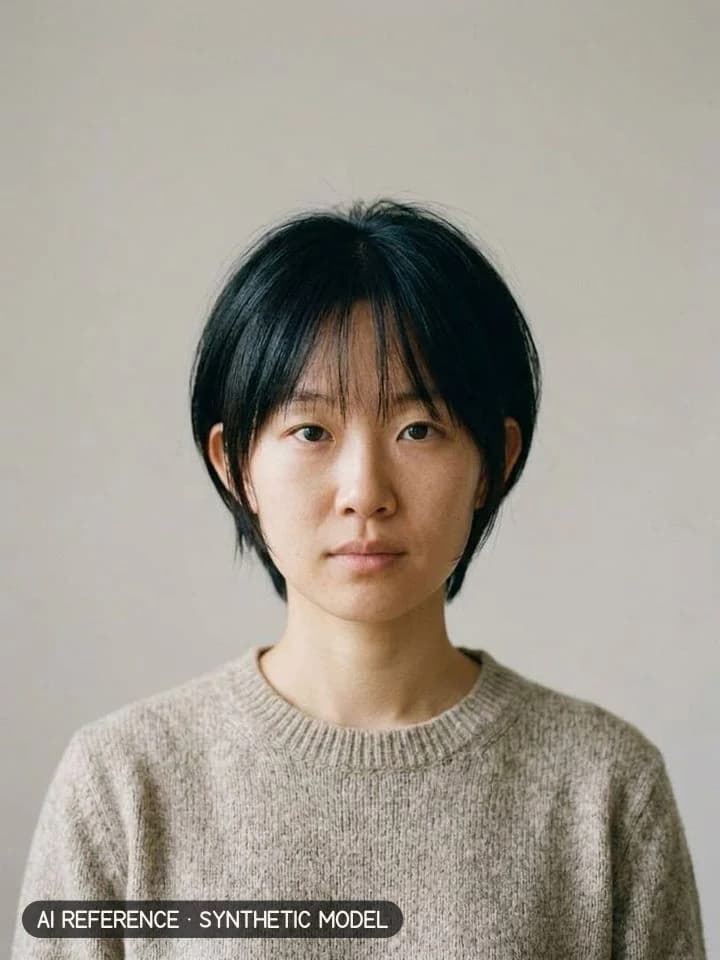
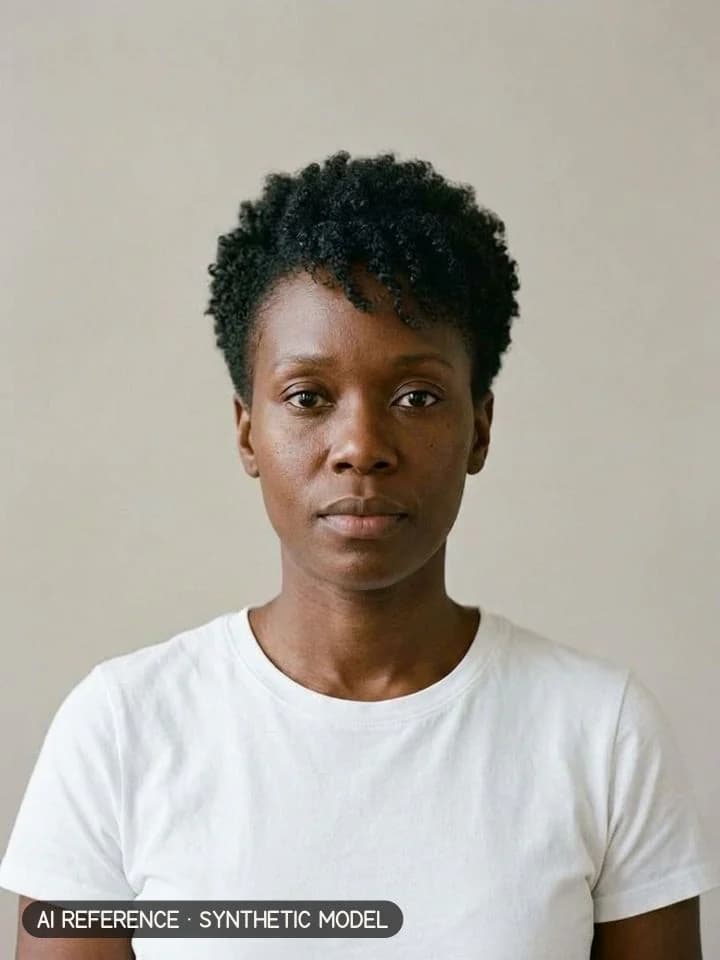
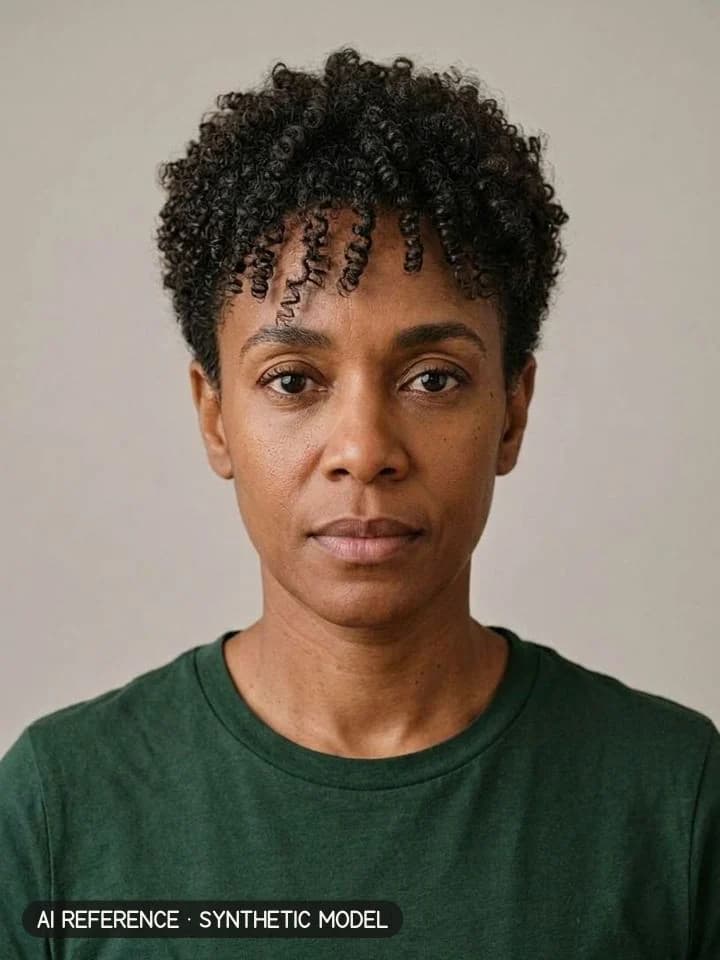
2. Classic pixie

63/100 proportion score

Best on 1A–2B, 4A–4C · top 1–3 in (2.5–7.5 cm) · recut every 4–6 weeks

Why it ranks here

  • Keeps weight off the jawline, which balances a shorter, wider face.Stylist convention
  • Shows off the ears, neck and jawline, which shows off an angular jaw.Stylist convention

When it doesn’t work

  • A short neck, a jaw-heavy lower third, prominent ears, a crown cowlick, thick coarse hair (needs debulking); grows out awkwardly.
  • 2C–3C hair (wavy and curly): the shape depends on a texture it can't hold, so we rule it out.
  • A hairline past Norwood 3: at stage 4 it's shown with a caveat; beyond that we hide it.

Tell your barber

“Top 1–3 in; tapered sides and nape; soft side fringe; debulk if thick.”

Upkeep: trim every 4–6 weeks, about $270–$390 a year at $30 a cut.

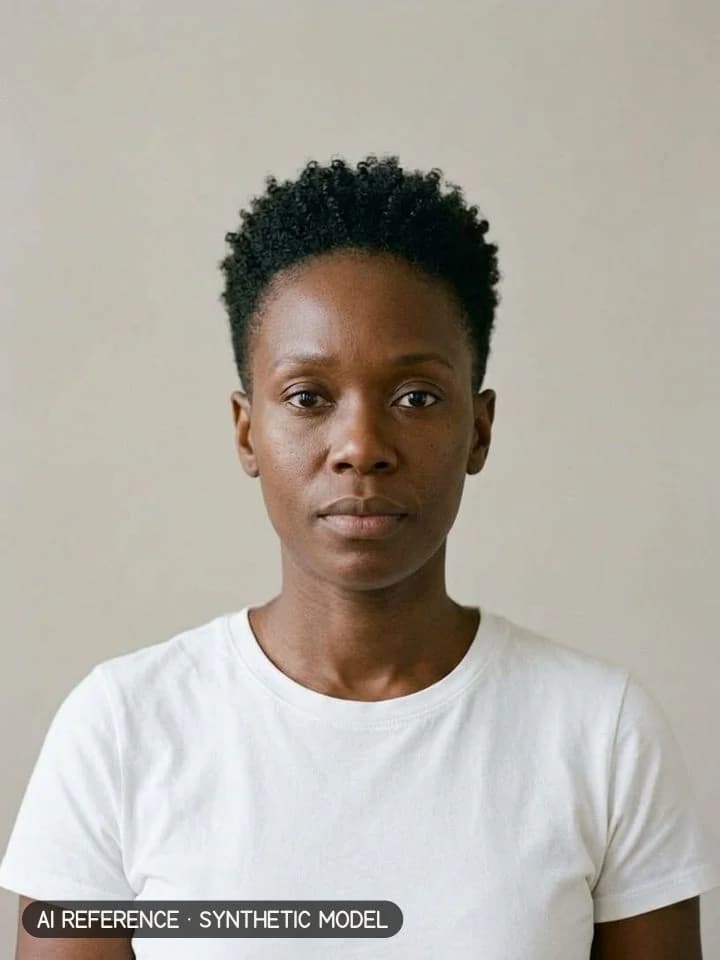
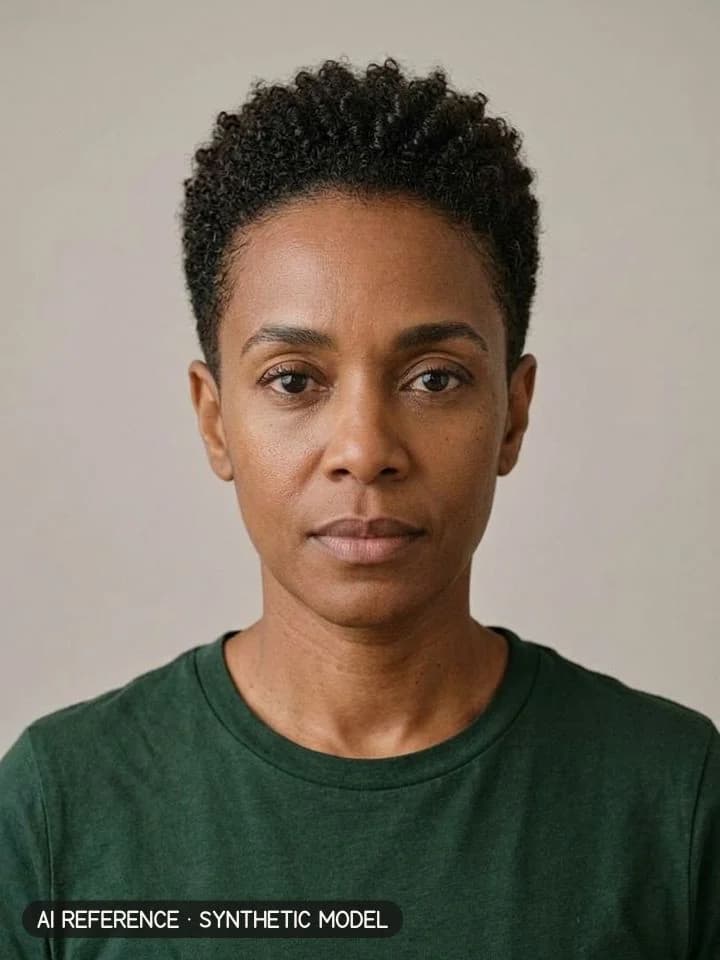
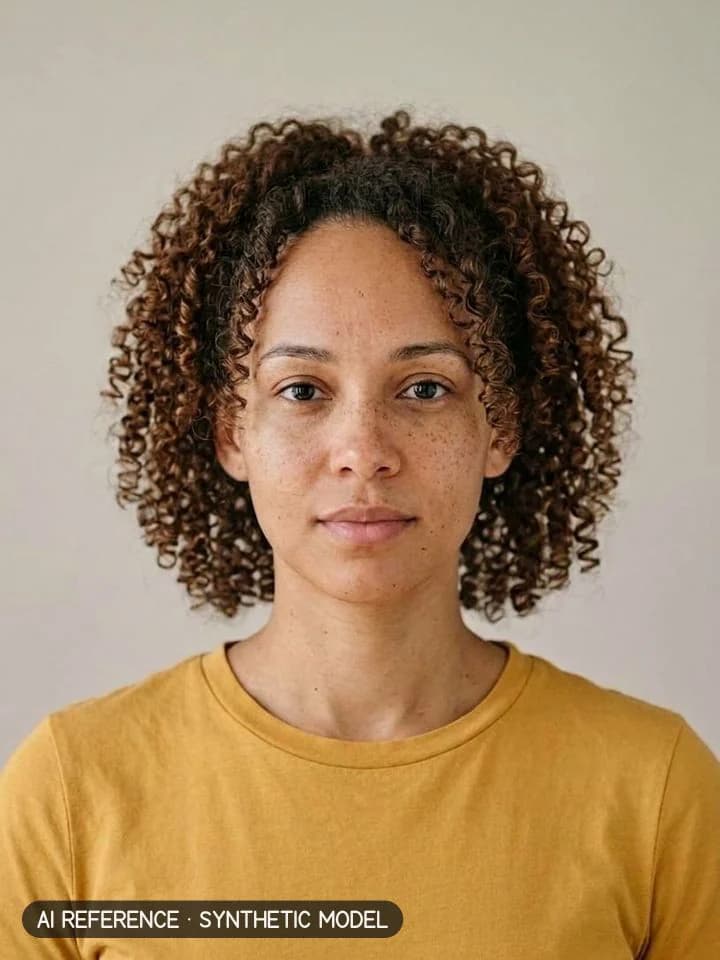
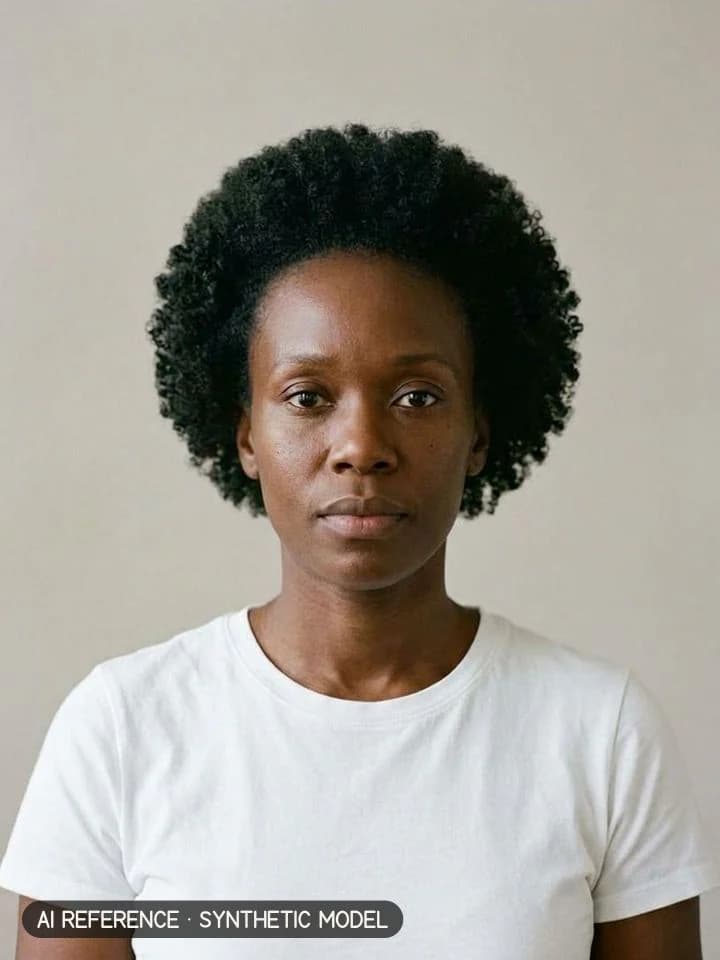
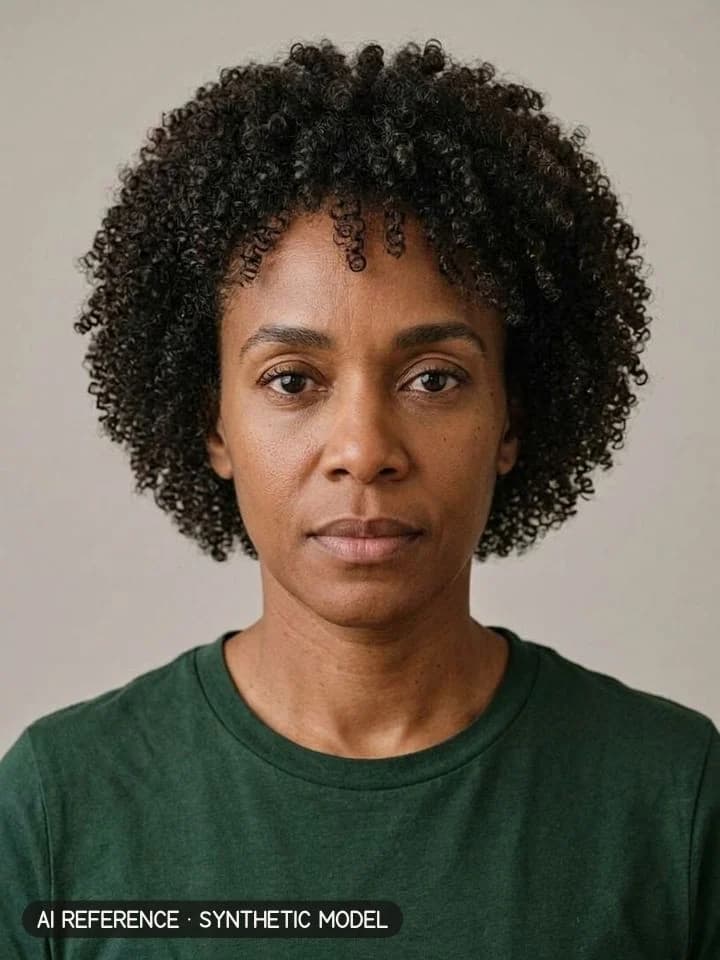
Classic pixie on Model W1 (light skin · straight 1B hair · 20s). AI reference on a synthetic model — not a real person.Classic pixie on Model W5 (deep brown skin · coily 4A–4B hair · 30s). AI reference on a synthetic model — not a real person.Classic pixie on Model W6 (medium-dark brown skin · tightly curly 3C–4A hair · 40s). AI reference on a synthetic model — not a real person.

AI references on synthetic models, not real people
3. Long pixie / bixie

63/100 proportion score

Best on 1A–2C · top 2–4 in (5–10 cm) · recut every 5–7 weeks

Why it ranks here

  • Softer lines and movement take the edge off a square jaw.Stylist convention
  • Keeps weight off the jawline, which balances a shorter, wider face.Stylist convention

When it doesn’t work

  • Very thick, coarse hair needs debulking.
  • 3B–4C hair (curly and coily): the shape depends on a texture it can't hold, so we rule it out.
  • A hairline past Norwood 3: at stage 4 it's shown with a caveat; beyond that we hide it.

Tell your barber

“2–4 in top and sides, ears half covered; tapered nape; long side-swept fringe.”

Upkeep: trim every 5–7 weeks, about $210–$300 a year at $30 a cut.

Long pixie / bixie on Model W2 (fair skin · straight 1C hair with silver strands · 50s). AI reference on a synthetic model — not a real person.Long pixie / bixie on Model W3 (olive skin · wavy 2A–2B hair · 30s). AI reference on a synthetic model — not a real person.Long pixie / bixie on Model W4 (light brown skin · curly 3A–3B hair · 20s). AI reference on a synthetic model — not a real person.

AI references on synthetic models, not real people
4. Shag

62/100 proportion score

Best on 2A–3B · top 3–5 in (7.5–12.5 cm) · recut every 6–8 weeks

Why it ranks here

  • Adds curves and softness, which balances an angular jaw.Stylist convention
  • Softer lines and movement take the edge off a square jaw.Stylist convention

When it doesn’t work

  • Very fine low-density hair; a round face if the volume sits at cheek level (move it to the crown); straight 1A–1B hair needs daily styling.
  • 1A, 1C, 3C–4C hair (straight, curly and coily): the shape depends on a texture it can't hold, so we rule it out.
  • Low-density hair: the cut relies on bulk that thin hair doesn't have.

Tell your barber

“Choppy layers with volume at the crown; short layers framing the face; curtain bangs; cut to air-dry.”

Upkeep: trim every 6–8 weeks, about $210–$270 a year at $30 a cut.

Shag on Model W1 (light skin · straight 1B hair · 20s). AI reference on a synthetic model — not a real person.Shag on Model W3 (olive skin · wavy 2A–2B hair · 30s). AI reference on a synthetic model — not a real person.Shag on Model W4 (light brown skin · curly 3A–3B hair · 20s). AI reference on a synthetic model — not a real person.

AI references on synthetic models, not real people

5. Wolf cut

61/100 proportion score

Best on 2A–3B · top 3–5 in (7.5–12.5 cm) · recut every 6–8 weeks

Why it ranks here

  • Adds height on top, which balances a shorter, wider face.Stylist convention
  • Adds curves and softness, which balances an angular jaw.Stylist convention

When it doesn’t work

  • Fine low-density hair, round faces, a conservative look; trend-dependent (Janif 2014: rarer looks rate higher).
  • 1A–1C, 3C–4C hair (straight, curly and coily): the shape depends on a texture it can't hold, so we rule it out.
  • Low-density hair: the cut relies on bulk that thin hair doesn't have.

Tell your barber

“Heavy crown layers; thinned-out lengths; mullet-ish back; curtain bangs.”

Upkeep: trim every 6–8 weeks, about $210–$270 a year at $30 a cut.

Wolf cut on Model M2 (fair skin · fine-wavy 2A hair with some gray · 40s). AI reference on a synthetic model — not a real person.Wolf cut on Model M5 (light brown skin · curly 3B–3C hair · 20s). AI reference on a synthetic model — not a real person.Wolf cut on Model W3 (olive skin · wavy 2A–2B hair · 30s). AI reference on a synthetic model — not a real person.

AI references on synthetic models, not real people
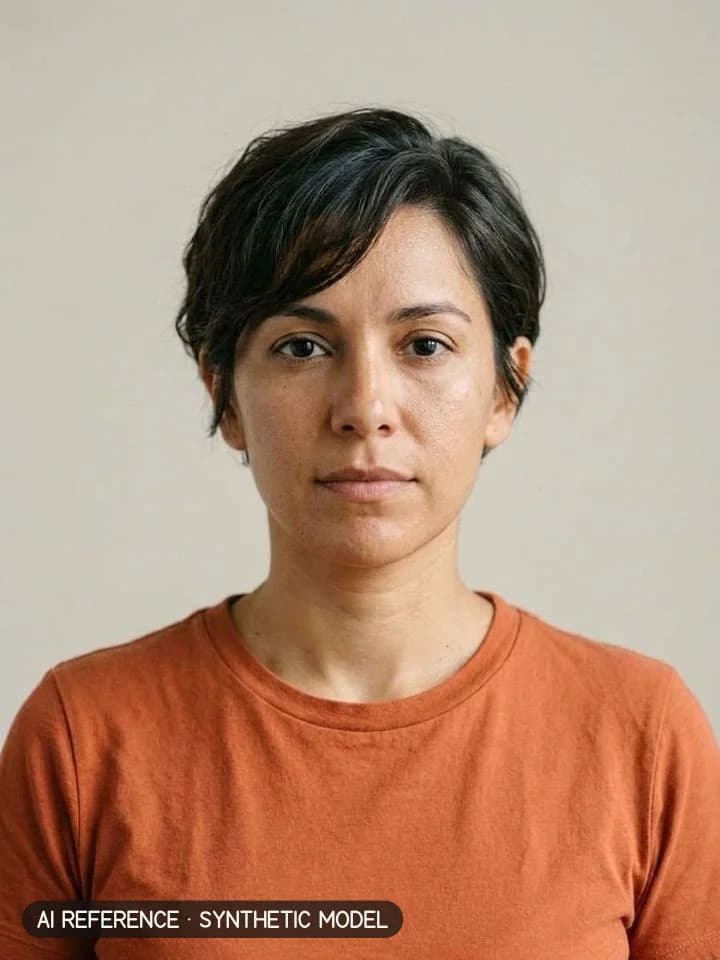
6. Stacked / inverted bob

61/100 proportion score

Best on 1A–2B · top 6–10 in (15–25.5 cm) · recut every 5–7 weeks

Why it ranks here

  • Adds vertical length, which balances a shorter, wider face.Stylist convention
  • Adds height on top, which balances a shorter, wider face.Stylist convention

When it doesn’t work

  • Long faces (keep the front at chin length); coarse curly hair puffs out.
  • 2C–4C hair (wavy, curly and coily): the shape depends on a texture it can't hold, so we rule it out.
  • A hairline past Norwood 3: at stage 4 it's shown with a caveat; beyond that we hide it.

Tell your barber

“Graduated stacked nape; front longer at chin to collarbone; angle to taste.”

Upkeep: trim every 5–7 weeks, about $210–$300 a year at $30 a cut.

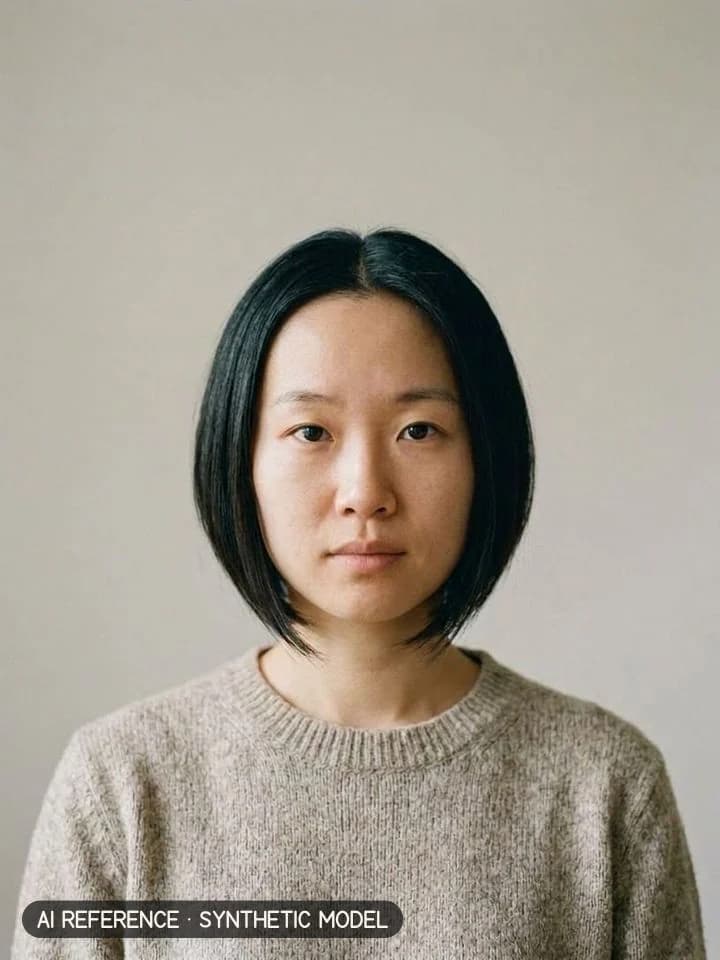
Stacked / inverted bob on Model W1 (light skin · straight 1B hair · 20s). AI reference on a synthetic model — not a real person.Stacked / inverted bob on Model W2 (fair skin · straight 1C hair with silver strands · 50s). AI reference on a synthetic model — not a real person.Stacked / inverted bob on Model W3 (olive skin · wavy 2A–2B hair · 30s). AI reference on a synthetic model — not a real person.

AI references on synthetic models, not real people
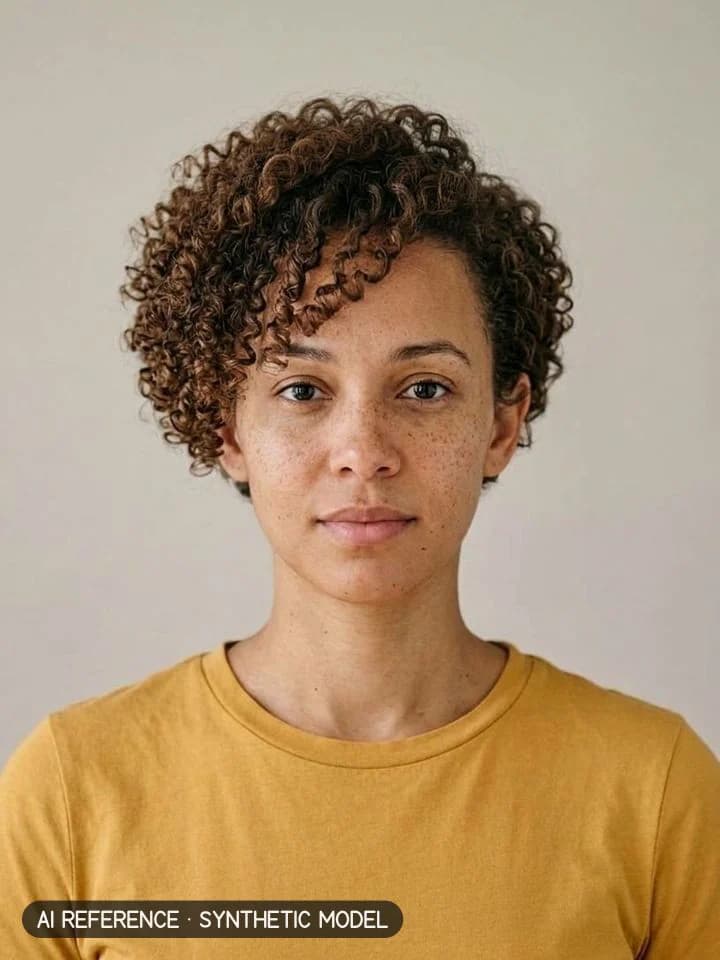
7. Tapered natural (TWA)

60/100 proportion score

Best on 4A–4C · top 1–3 in (2.5–7.5 cm) · recut every 3–6 weeks

Why it ranks here

  • Adds height on top, which balances a shorter, wider face.Stylist convention
  • Shows off the ears, neck and jawline, which shows off an angular jaw.Stylist convention

When it doesn’t work

  • A very long face (keep the sides fuller).
  • 1A–3C hair (straight, wavy and curly): the shape depends on a texture it can't hold, so we rule it out.
  • A hairline past Norwood 3: at stage 4 it's shown with a caveat; beyond that we hide it.

Tell your barber

“Top 1–3 in shaped; tapered sides and nape; define with coils.”

Upkeep: trim every 3–6 weeks, about $270–$510 a year at $30 a cut.

Tapered natural (TWA) on Model W5 (deep brown skin · coily 4A–4B hair · 30s). AI reference on a synthetic model — not a real person.Tapered natural (TWA) on Model W6 (medium-dark brown skin · tightly curly 3C–4A hair · 40s). AI reference on a synthetic model — not a real person.

AI references on synthetic models, not real people
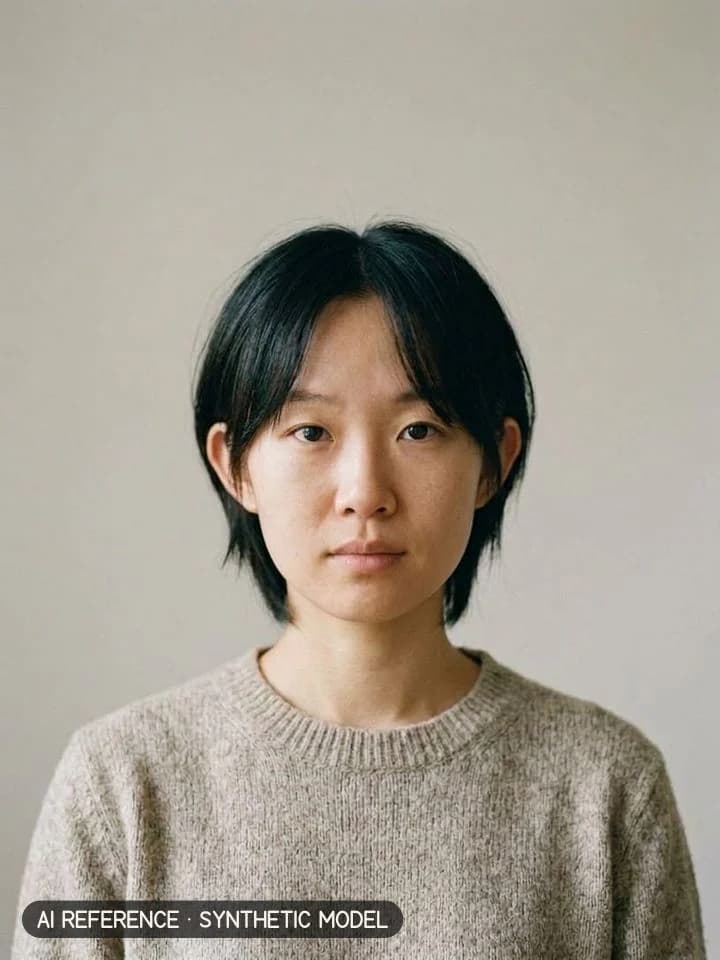
8. Curly rounded cut (Deva-style)

60/100 proportion score

Best on 3A–3C · top 4–8 in (10–20.5 cm) · recut every 10–12 weeks

Why it ranks here

  • Adds curves and softness, which balances an angular jaw.Stylist convention
  • Softer lines and movement take the edge off a square jaw.Stylist convention

When it doesn’t work

  • Round or wide faces (keep volume on top, not at the sides); if you often straighten, the curly shag suits better.
  • 1A–2C, 4B–4C hair (straight, wavy and coily): the shape depends on a texture it can't hold, so we rule it out.
  • Low-density hair: the cut relies on bulk that thin hair doesn't have.

Tell your barber

“Dry cut curl by curl; rounded shape; face framing; no thinning shears.”

Upkeep: trim every 10–12 weeks, about $120–$150 a year at $30 a cut.

Curly rounded cut (Deva-style) on Model W4 (light brown skin · curly 3A–3B hair · 20s). AI reference on a synthetic model — not a real person.Curly rounded cut (Deva-style) on Model W5 (deep brown skin · coily 4A–4B hair · 30s). AI reference on a synthetic model — not a real person.Curly rounded cut (Deva-style) on Model W6 (medium-dark brown skin · tightly curly 3C–4A hair · 40s). AI reference on a synthetic model — not a real person.

AI references on synthetic models, not real people
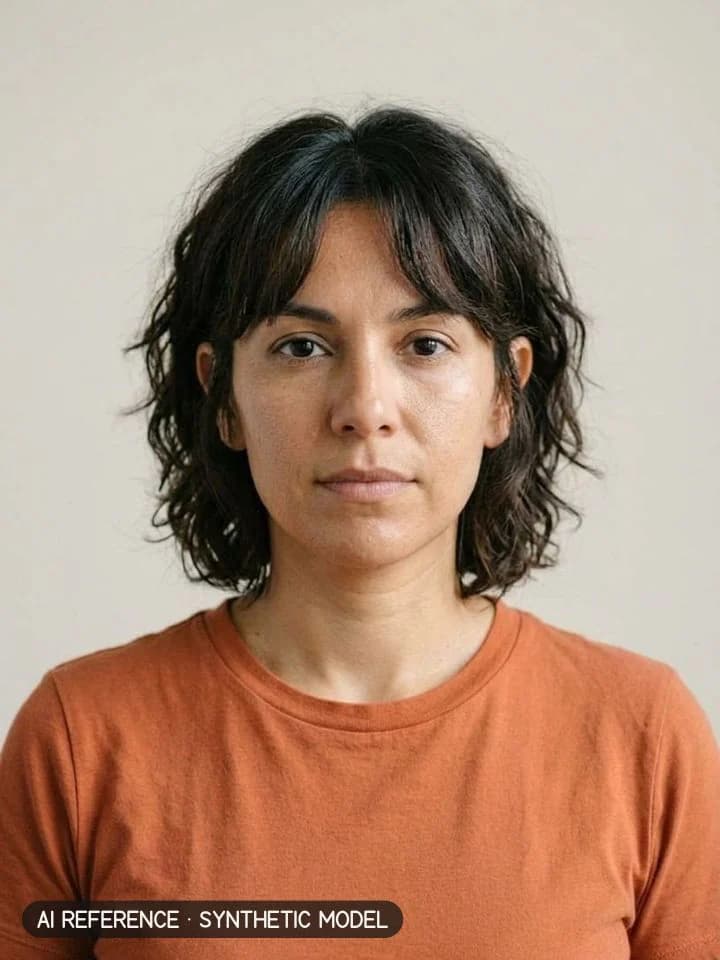
9. Long layers (V or U)

60/100 proportion score

Best on 2A–3A · top 14–20 in (35.5–51 cm) · recut every 8–12 weeks

Why it ranks here

  • Adds vertical length, which balances a shorter, wider face.Stylist convention
  • Adds curves and softness, which balances an angular jaw.Stylist convention

When it doesn’t work

  • A long face worn flat with a centre part; fine hair (a V-shape thins the perimeter).
  • 1A, 1C, 3B–4C hair (straight, curly and coily): the shape depends on a texture it can't hold, so we rule it out.
  • Low-density hair: the cut relies on bulk that thin hair doesn't have.

Tell your barber

“Below-shoulder length; long layers from the chin down; U- or soft V-shape at the back.”

Upkeep: trim every 8–12 weeks, about $120–$210 a year at $30 a cut.

Long layers (V or U) on Model W1 (light skin · straight 1B hair · 20s). AI reference on a synthetic model — not a real person.Long layers (V or U) on Model W3 (olive skin · wavy 2A–2B hair · 30s). AI reference on a synthetic model — not a real person.Long layers (V or U) on Model W4 (light brown skin · curly 3A–3B hair · 20s). AI reference on a synthetic model — not a real person.

AI references on synthetic models, not real people
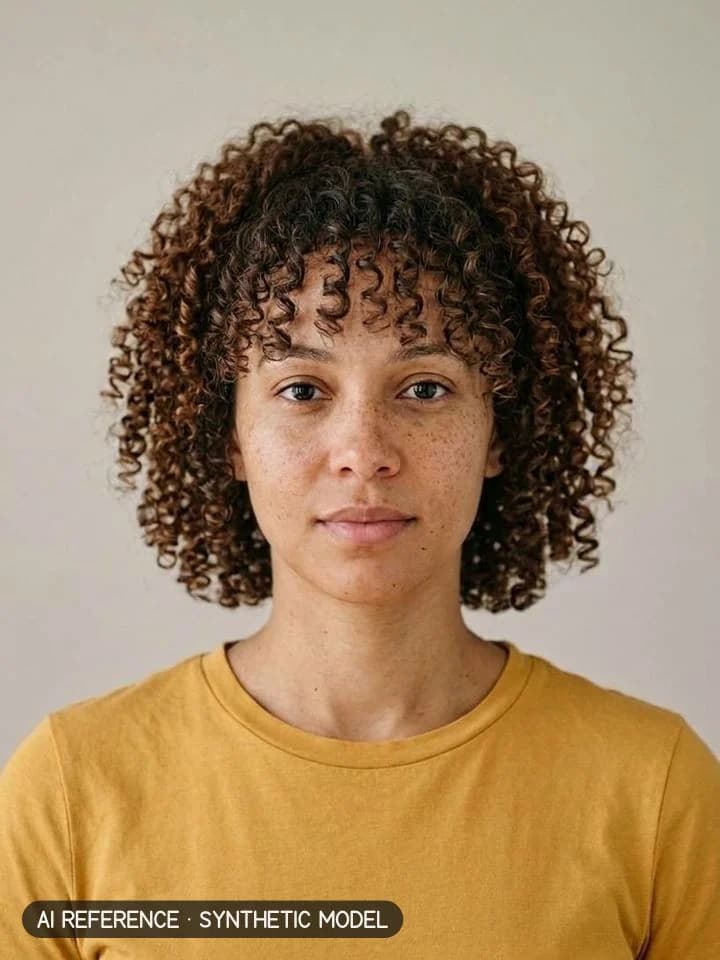
10. Curtain-bang layered cut

60/100 proportion score

Best on 1B–2C · top 4–6 in (10–15 cm) · recut every 6–8 weeks

Why it ranks here

  • Softer lines and movement take the edge off a square jaw.Stylist convention
  • Adds curves and softness, which balances an angular jaw.Stylist convention

When it doesn’t work

  • A very round, short face (end the bangs below the cheekbone); a front cowlick.
  • 1A, 3B–4C hair (straight, curly and coily): the shape depends on a texture it can't hold, so we rule it out.
  • Low-density hair: the cut relies on bulk that thin hair doesn't have.

Tell your barber

“Shoulder length with layers; curtain bangs parted centre, longest at the cheekbone.”

Upkeep: trim every 6–8 weeks, about $210–$270 a year at $30 a cut.

Curtain-bang layered cut on Model W1 (light skin · straight 1B hair · 20s). AI reference on a synthetic model — not a real person.Curtain-bang layered cut on Model W3 (olive skin · wavy 2A–2B hair · 30s). AI reference on a synthetic model — not a real person.Curtain-bang layered cut on Model W4 (light brown skin · curly 3A–3B hair · 20s). AI reference on a synthetic model — not a real person.

AI references on synthetic models, not real people
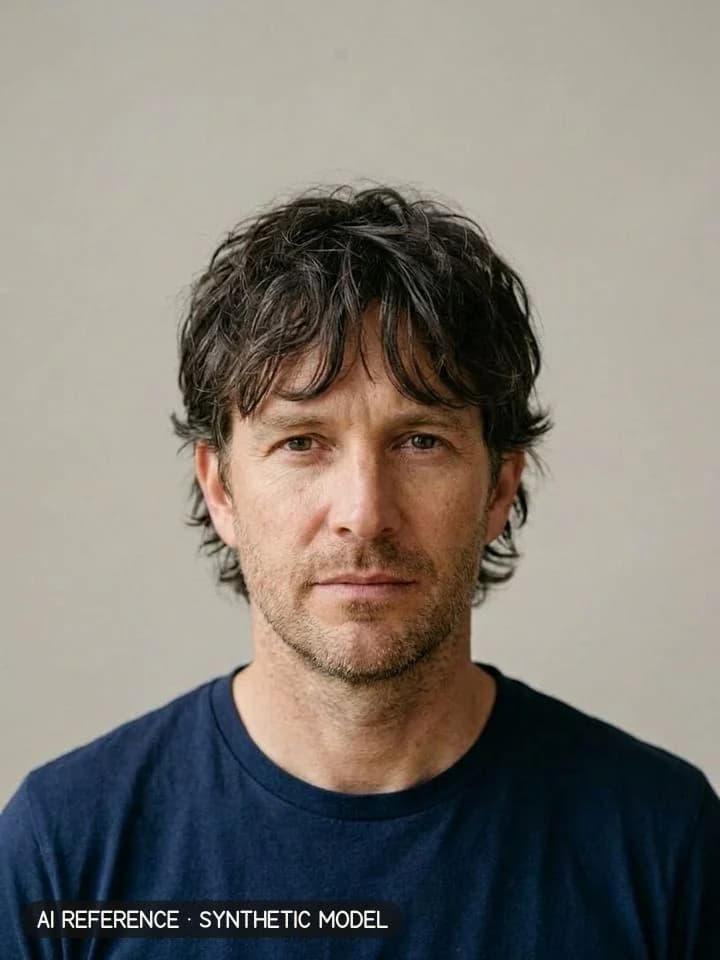
What stylists aim for

Convention says soften the corners: texture, waves or layers, and curved lines near the jaw. If you'd rather show the jaw off, the “emphasize jaw” option in the analysis flips this and favours sharp lines.

Stylist convention

What convention says to skip

Blunt lines that end right at the jaw corner, unless you want to emphasise the jaw.

Your list, not a textbook face. The free analysis adds your texture, density and hairline and explains every pick.

Start free · 2 min

Square face, women's cuts: questions

What is the best haircut for a square face (women)?
On proportions alone, our engine ranks the butterfly cut, classic pixie and long pixie / bixie highest for a textbook square face. For the butterfly cut: adds curves and softness, which balances an angular jaw. Your hair texture, density and hairline count for more than proportions, so your own list can differ.
What should women with square faces avoid?
By stylist convention: blunt lines that end right at the jaw corner, unless you want to emphasise the jaw. It's a convention, not a law. A cut missing from this top 10 isn't wrong for a square face; it just does less for its proportions.
How do I know if my face is really square?
Most faces are a mix, and judging by eye is unreliable. The free face shape detector measures your length-to-width, forehead-to-jaw and jaw-corner ratios in your browser in about 10 seconds; your photo never leaves your phone. Even the textbook square face on this page reads as 91% square in our engine.
Why does my hair matter more than my face shape?
Because hair decides what a cut can physically do. Texture, density and hairline rule cuts in or out entirely; proportions only nudge the order, at about 15% of a full score. That's why this page is labelled proportions-only and the full analysis asks about your hair first.